New Opportunities in State Horticulture: GSSSB Announces 100 Assistant Vacancies for 2026
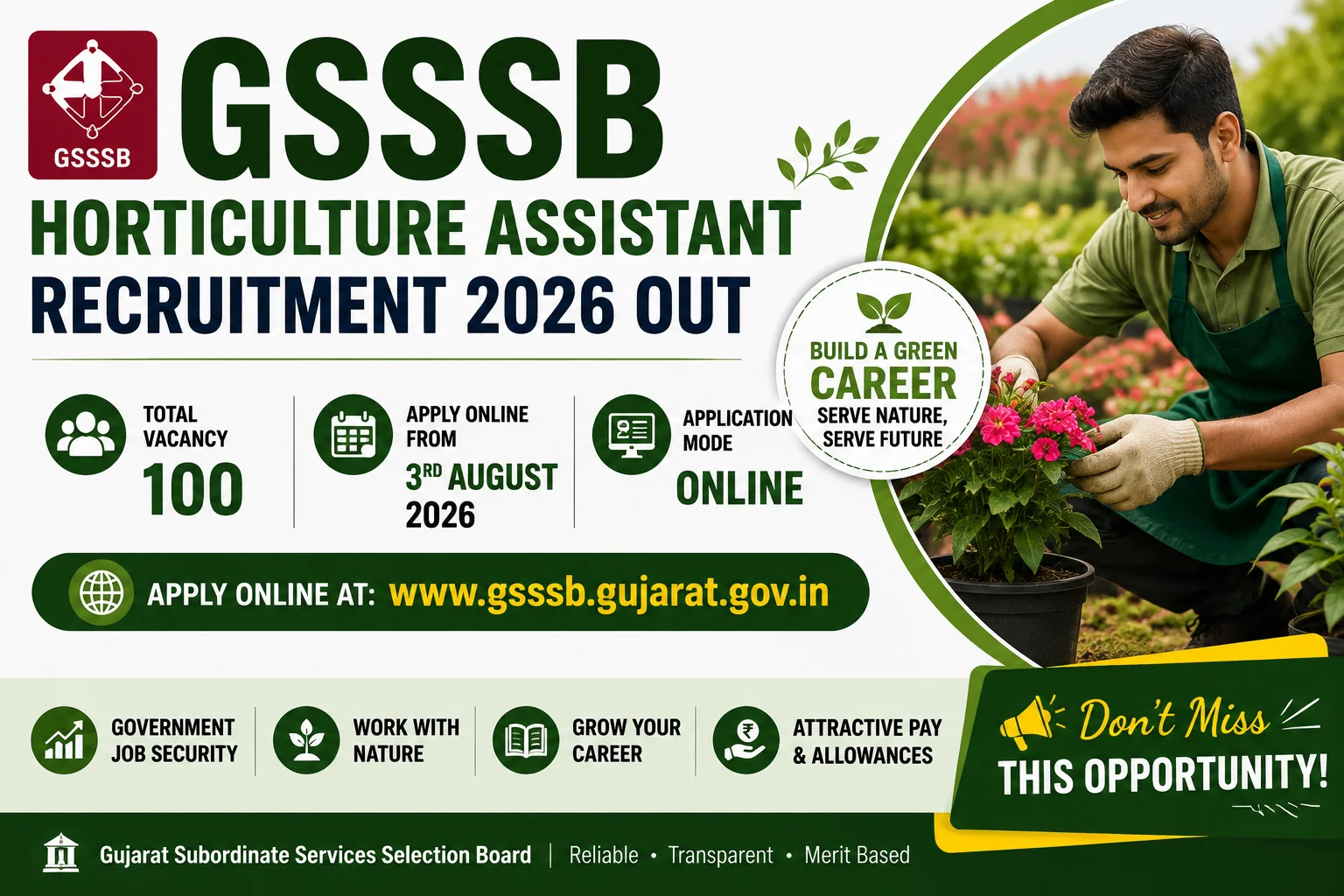
The Gujarat Subordinate Services Selection Board (GSSSB) has officially unveiled its recruitment drive for the 2026 fiscal cycle, targeting the expansion of the state’s technical workforce in the agricultural sector. With a notification confirming 100 vacancies for the position of Horticulture Assistant, the state government aims to bolster its frontline extension services and technical support network. This recruitment initiative represents a significant opportunity for qualified agricultural professionals to secure public sector roles dedicated to enhancing horticultural productivity and supporting the regional farming community.
The application process is scheduled to commence on August 3rd, marking the start of a competitive selection window for candidates possessing the requisite academic background in horticulture and related agricultural sciences. As the demand for specialized technical guidance increases due to shifting climate patterns and the modernization of farming practices, these roles are set to play a pivotal part in the state's agricultural development strategy.
Strengthening Technical Extension and Field Support
The appointment of 100 new Horticulture Assistants is a strategic move to bridge the gap between advanced agricultural research and practical field application. Horticulture, which encompasses the intensive cultivation of fruits, vegetables, flowers, and medicinal crops, requires a nuanced approach to soil management, pest control, and post-harvest handling. By deploying these professionals across various districts, the GSSSB intends to provide farmers with localized, data-driven advice that can improve crop yields and quality.
These roles typically involve a mix of administrative oversight and direct field engagement. Horticulture Assistants are expected to act as the primary point of contact for farmers seeking information on government subsidies, improved seed varieties, and sustainable irrigation techniques. Furthermore, they are tasked with monitoring local crop health, reporting on pest outbreaks, and ensuring that agricultural best practices—such as drip irrigation and integrated pest management (IPM)—are effectively implemented at the grassroots level. This infusion of new personnel is expected to improve the efficiency of state-run nurseries, demonstration farms, and public awareness campaigns.
Eligibility, Selection, and Application Procedures
For prospective applicants, understanding the procedural requirements is essential for a successful candidacy. The GSSSB recruitment process is highly structured, typically involving a combination of written examinations and document verification phases. Candidates are generally expected to hold a diploma or degree in Horticulture or a closely related agricultural science discipline from a recognized institution. It is crucial for applicants to review the detailed notification once it goes live on August 3rd to ensure they meet the specific age criteria, educational qualifications, and any regional language proficiency requirements set forth by the board.
The application process will be conducted entirely through the official online portal designated by the GSSSB. Interested individuals should prepare their academic credentials, identification documents, and digital photographs in advance to ensure a smooth submission process. Given the anticipated volume of applicants, candidates are encouraged to submit their forms well before the deadline to avoid potential technical congestion on the server. The board will likely issue further instructions regarding the syllabus, examination pattern, and admit card release dates following the conclusion of the application window.
What This Means for Farmers
The recruitment of 100 Horticulture Assistants carries direct implications for the farming community across Gujarat. For the individual farmer, this development translates into improved access to expert technical support. When state-level departments are fully staffed, the turnaround time for field visits, diagnostic support, and the processing of agricultural grants generally improves, allowing farmers to make more informed decisions during the critical planting and harvesting seasons.
Key impacts for the agricultural community include:
- Better Knowledge Transfer: With more assistants on the ground, farmers can expect more consistent training sessions on modern agricultural technologies, such as greenhouse management and protected cultivation.
- Enhanced Disease Surveillance: A larger workforce allows for more frequent monitoring of crop health, enabling early detection of pests and pathogens which can save entire harvests from failure.
- Simplified Access to Government Schemes: Horticulture Assistants serve as facilitators for state subsidies and insurance programs. A full roster of staff ensures that farmers spend less time navigating bureaucracy and more time focusing on production.
- Economic Stability: By promoting high-value horticultural crops, these assistants help farmers diversify their income streams, moving away from a reliance on traditional commodity crops toward more profitable, market-responsive produce.
Farmers are encouraged to stay in contact with their local agricultural offices to learn when these new assistants will be assigned to their respective regions, as their presence will be instrumental in adopting the next generation of productive and sustainable farming practices.