Odisha Agriculture Department Faces Accountability Shake-up Over Field Visit Protocols
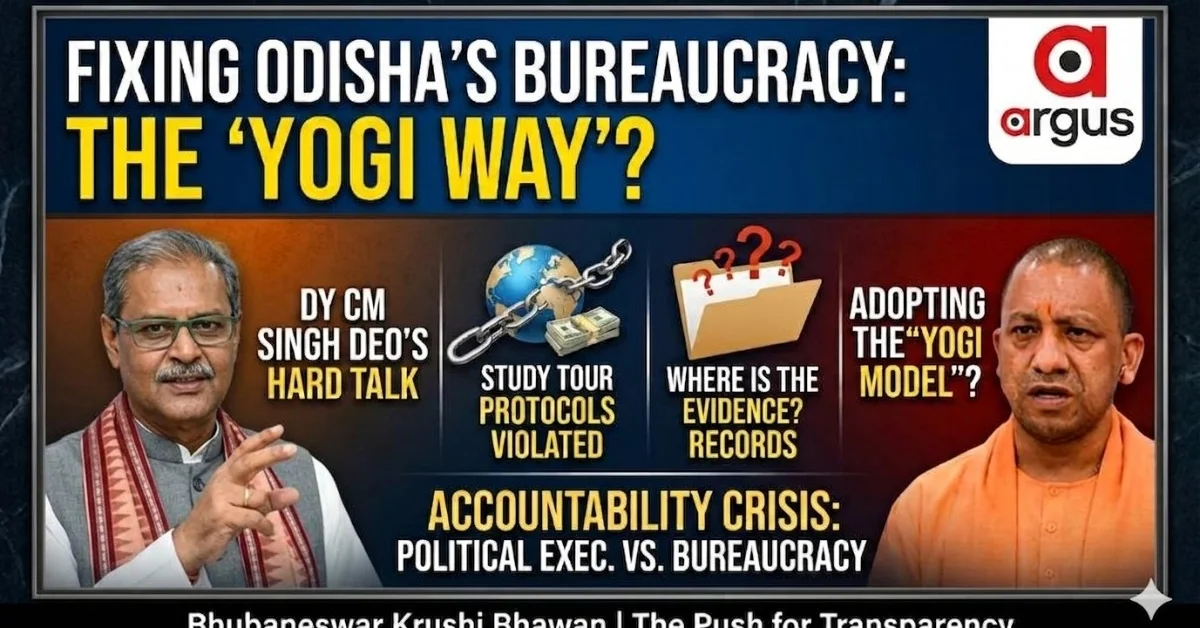
In a significant shift toward administrative rigor, Odisha’s Deputy Chief Minister and Minister for Agriculture and Farmers’ Empowerment, KV Singh Deo, has issued a stern directive to the state’s horticulture department. The mandate follows growing concerns regarding the efficacy and adherence to established protocols governing official study tours and field visits. Minister Singh Deo’s recent remarks have signaled an end to what he describes as a culture of complacency, demanding that all departmental travel and field-based interventions be directly linked to measurable improvements in agricultural output and farmer outreach.
The core of the Minister’s grievance lies in the perceived disconnect between the resources allocated for professional development tours and the actual on-ground implementation of modern horticultural practices. By invoking the need for a more disciplined, results-oriented administrative framework—often characterized in political discourse as the "Yogi model" of governance—the Minister is pushing for a system where bureaucratic accountability is non-negotiable. Officials are now required to submit comprehensive reports detailing the specific learnings from their tours and, more crucially, how those findings have been integrated into the state’s ongoing horticulture extension programs.
Evaluating the Efficacy of Administrative Field Visits
Study tours and field visits have long been a staple of agricultural administration, intended to provide department officials with exposure to best practices in crop management, irrigation technology, and post-harvest supply chain logistics. However, Minister Singh Deo’s intervention suggests that these initiatives have, in recent years, lacked the necessary oversight to ensure they serve the public interest. The directive emphasizes that these visits must transition from being perceived as routine excursions to being viewed as essential data-gathering missions that directly benefit the farming community.
The Minister’s warning carries a clear threat of disciplinary action for those found failing to comply with reporting standards. By mandating a post-visit audit, the department aims to ensure that the knowledge gained—whether it pertains to high-yield variety adoption, organic farming techniques, or pest management—is effectively disseminated to extension workers and, ultimately, the farmers themselves. This move is part of a broader strategy to streamline the bureaucracy within the Ministry of Agriculture, ensuring that administrative spending is strictly audited against project outcomes rather than mere attendance records.
Standardizing Horticulture Extension Services
The push for stricter protocols is also aimed at fostering a more uniform standard of service delivery across Odisha’s diverse agro-climatic zones. Horticulture, a critical sector for the state’s economic diversification, requires precise technical support to thrive. When officials fail to bring back actionable insights from their field visits, the state’s capacity to support farmers in transitioning to high-value horticultural crops is severely hampered.
Minister Singh Deo has underscored that the government will no longer tolerate a "check-the-box" mentality. Instead, the department is moving toward a system of performance-based evaluation. For the horticulture wing, this means that future field visits will likely require pre-approved objectives, clearly defined KPIs (Key Performance Indicators), and a post-tour assessment that evaluates the potential for local adaptation of the observed technologies. The objective is to cultivate a responsive bureaucracy that is as agile and technically proficient as the farmers it serves.
What This Means for Farmers
For the farming community in Odisha, this administrative crackdown represents a potential pivot toward higher-quality extension support and improved access to technical expertise. The practical implications include:
- Better Technical Support: As officials are held accountable for their field visits, the knowledge gap between research institutions and the farm gate is expected to shrink. Farmers should anticipate more evidence-based guidance on horticultural productivity.
- Increased Transparency: The mandate for detailed reporting means that the government’s agricultural strategy will be more transparent. Farmers can expect the department to be more focused on delivering tangible results, such as improved distribution of planting materials and better advisory services for specialized crops.
- Economic Efficiency: By curbing unnecessary bureaucratic spending and focusing resources on high-impact interventions, the state is aiming to ensure that the agriculture budget is utilized more efficiently. This creates a more stable environment for long-term investment in horticultural infrastructure, such as cold storage and processing units.
- Actionable Feedback Loops: With a more disciplined administration, there is a greater opportunity for farmers to see their feedback integrated into policy. A bureaucracy that is required to report on the success of its field visits is inherently more likely to interact meaningfully with the producers on the ground.
Ultimately, the Minister’s directive serves as a reminder that the administrative apparatus of the state exists to facilitate agricultural growth. For the average farmer, the success of this initiative will be measured not by the number of reports filed in Bhubaneswar, but by the increased profitability and sustainability of their horticultural operations in the coming seasons.