Stalled Monsoon Triggers Agricultural Crisis Across Kutch
The Kutch region of Gujarat is currently facing a precarious agricultural impasse as a stalled monsoon disrupts the critical kharif sowing window. For a landscape defined by its reliance on rainfed agriculture and pastoralism, the absence of consistent precipitation has transformed local fields into parched tracts, threatening both food security and the livelihoods of thousands of smallholder farmers. As the calendar pushes past the optimal planting dates, the ecological distress is rapidly manifesting as a significant economic strain, leaving the agricultural sector in a state of suspended animation.
The monsoon, which typically breathes life into the semi-arid plains of Kutch by late June, has been characterized by prolonged dry spells and erratic distribution this season. In agricultural science, the timing of sowing is as vital as the availability of water itself; crops rely on specific soil moisture thresholds and temperature windows to achieve germination and early-stage root development. With these windows now slamming shut, the regional agrarian economy is bracing for a season of diminished yields and potential crop failure.
Escalating Costs and the Fodder Crisis
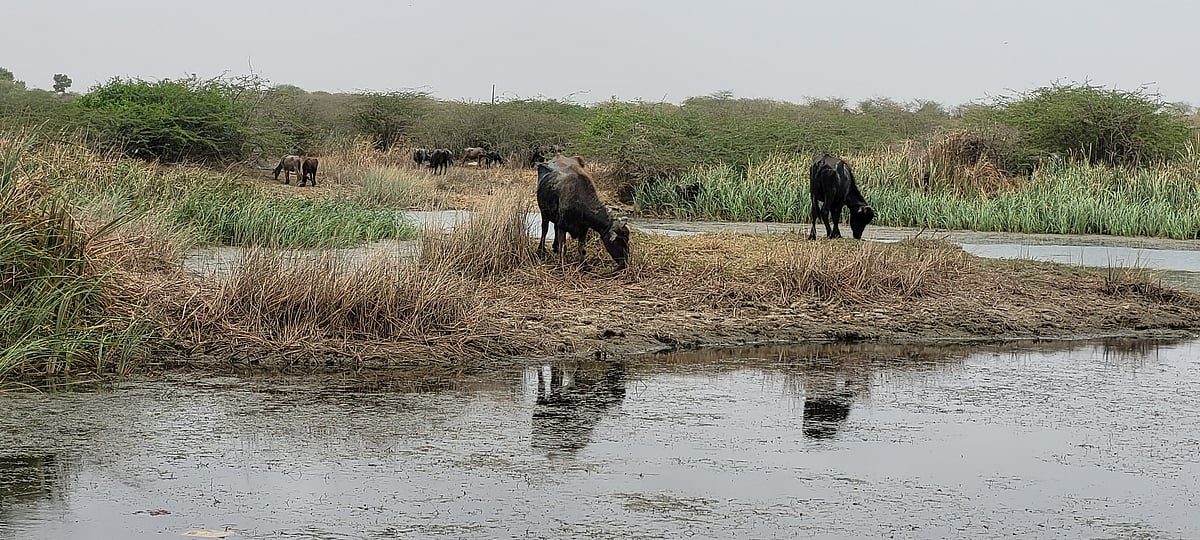
Perhaps the most immediate and visceral impact of the delayed rains is the skyrocketing cost of fodder. Kutch is renowned for its robust livestock economy, which serves as a vital buffer for farm households during lean agricultural years. However, the lack of rainfall has decimated natural grazing lands, forcing pastoralists and farmers to rely heavily on purchased supplements. Market reports indicate that fodder prices have effectively doubled in recent weeks, placing an immense financial burden on livestock owners.
The scarcity of green fodder is not merely a logistical challenge; it is an economic crisis that threatens the viability of the entire livestock value chain. When the cost of maintaining cattle, buffaloes, and small ruminants exceeds the potential revenue from dairy and wool production, farmers are often forced into distress sales or premature culling. This cycle of liquidation not only depletes family assets but also strips the region of its productive agricultural capital, making recovery in subsequent seasons significantly more difficult.
Ecological Imbalance and Long-term Vulnerability
The meteorological stagnation currently observed over Kutch underscores the broader challenges of climate variability in rainfed zones. When the monsoon fails to arrive on schedule, the soil moisture deficit deepens, leading to increased surface evaporation and the degradation of soil structure. The inability to plant drought-resistant varieties or shift to alternate cropping patterns within the narrow window of moisture availability highlights the systemic vulnerability of the region’s current agricultural infrastructure.
Furthermore, the environmental stress is compounded by the depletion of groundwater reserves. In the absence of surface water replenishment from monsoon rains, farmers have turned to deep-bore irrigation to salvage standing crops or sustain fodder plots. This over-extraction risks long-term salinization and permanent aquifer depletion, further entrenching the ecological distress. The current situation serves as a stark reminder that in arid regions, water management must move beyond reactionary measures toward comprehensive, landscape-level resilience strategies.
What This Means for Farmers
For the farmers of Kutch, the immediate outlook is one of extreme caution and strategic reallocation of resources. The economic strain necessitates a shift in priorities to protect core assets:
- Prioritize Livestock Preservation: Given the doubling of fodder prices, farmers should consider forming community-level fodder banks or coordinating bulk purchasing to stabilize costs. Protecting breeding stock remains the highest priority for long-term economic recovery.
- Re-evaluate Sowing Strategies: As the primary sowing window closes, farmers are advised to pivot away from high-water-demand crops. Consulting with local agricultural extension offices regarding short-duration or drought-tolerant cultivars is essential to minimize the risk of total investment loss.
- Monitor Soil Moisture Levels: Before committing expensive inputs like fertilizers or seeds to parched soil, perform localized moisture checks. Investing in inputs for a crop that has a low probability of successful germination due to lack of sub-soil moisture will only exacerbate financial losses.
- Explore Risk Mitigation: Farmers should verify their coverage under crop insurance schemes and document all climate-related losses. Maintaining accurate records of input costs and yield discrepancies is crucial for accessing potential government compensation or disaster relief funds.
- Adopt Water-Efficient Practices: Where irrigation is available, transitioning to micro-irrigation systems such as drip or sprinkler setups is no longer optional. These methods reduce evaporative loss and ensure that limited water resources are directed precisely to the root zones of the most valuable crops.