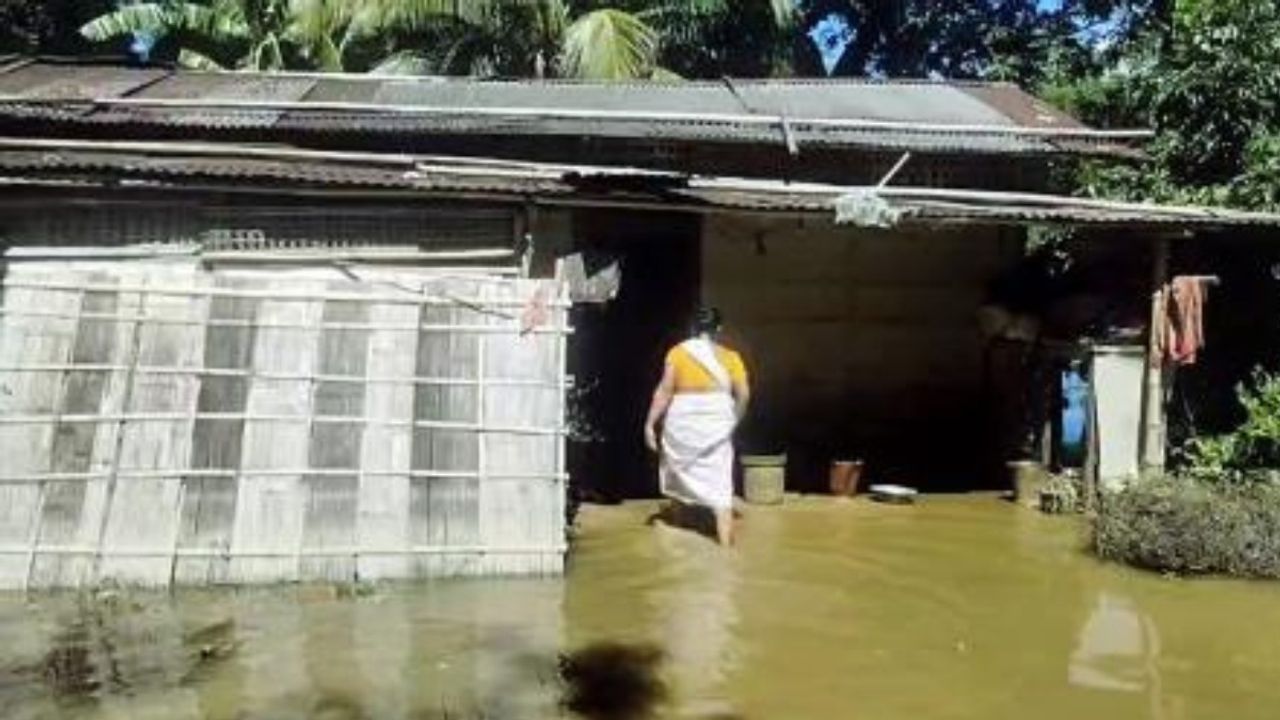
Assam Congress Calls for Judicial Oversight Amid Allegations of Flood Relief Mismanagement
The political discourse surrounding flood management in Assam has intensified following formal accusations from the state unit of the Congress party. On August 2, opposition leaders leveled sharp criticism at the state government, alleging that a critical failure to effectively utilize disaster relief funds provided by the Union government has exacerbated the impact of the annual monsoon flooding. The party has now formally demanded a Supreme Court-monitored investigation into the administration’s handling of infrastructure and crisis mitigation, characterizing the recurring devastation as “man-made” rather than merely a natural consequence of seasonal rainfall.
The Contention: Budgetary Shortfalls and Infrastructure Neglect
At the heart of the opposition's argument is the claim that the state government has failed to translate central financial assistance into tangible flood-resilience infrastructure. While the Centre routinely allocates disaster relief funds to Assam, the Congress alleges that inadequate budgetary provisions at the state level—coupled with a lack of long-term planning—have rendered these funds ineffective. Critics point to the recurring breaches in embankments and the failure of drainage systems in low-lying agricultural belts as primary evidence of systemic neglect.
The term “man-made” floods, as used by the opposition, refers to the alleged lack of coordination in dam management and the failure to maintain vital water-control infrastructure during the pre-monsoon period. According to the opposition, the state government has prioritized reactive relief measures—such as temporary camps and emergency rations—over proactive engineering projects that could mitigate the damage to farmland and rural settlements. By calling for a Supreme Court-monitored probe, the party seeks to uncover potential irregularities in the allocation and expenditure of these funds, suggesting that the current approach is reactive and insufficient to address the scale of the crisis.
Economic Impact on Agriculture and Rural Livelihoods
Assam’s economy is fundamentally tied to its alluvial plains, where agriculture serves as the backbone for millions of households. The intensity of the current flooding, which the opposition attributes to administrative failure, has resulted in widespread crop loss and the destruction of critical soil health. When flood management systems fail, it is not merely a matter of infrastructure damage; it is a direct blow to the food security and economic stability of the region.
Agronomists have long noted that the siltation of riverbeds and the decay of existing embankments are manageable issues with sustained investment and scientific oversight. The opposition’s demand for an investigation highlights a growing frustration among rural stakeholders who feel that the gap between central funding and local execution is widening. The claim is that without a transparent, high-level audit of how disaster funds are deployed, the state will remain trapped in a cycle of destruction that disproportionately harms smallholder farmers, who lack the capital to recover from repeated seasonal losses.
What This Means for Farmers
For the agricultural community in Assam, this political standoff underscores a period of profound uncertainty. As the debate over governance and relief fund management continues, farmers face immediate, practical challenges that require attention regardless of the political climate:
- Increased Financial Vulnerability: The lack of robust, long-term flood mitigation infrastructure means that farmers must increasingly rely on crop insurance and emergency government aid. It is vital for landholders to maintain meticulous records of flood-related losses to ensure they are eligible for any forthcoming compensation packages.
- Infrastructure Advocacy: Farmers’ cooperatives and local agricultural bodies are encouraged to document the state of local embankments and drainage channels. Providing documented evidence of infrastructure failure to local agricultural offices can create a paper trail that supports demands for better maintenance and accountability.
- Adoption of Resilient Practices: In light of the “man-made” flood narrative, which suggests that systemic improvements may be slow to materialize, there is a renewed need for climate-resilient farming techniques. This includes shifting toward flood-tolerant crop varieties and diversifying income sources to reduce reliance on single-season harvests that remain highly susceptible to waterlogging.
- Economic Planning: Given the volatility surrounding relief funding, agricultural households should prioritize liquidity and debt management. The political demand for a probe suggests that funds may be tied up in administrative reviews, making it essential for farmers to explore credit options through institutional channels rather than relying solely on the expectation of rapid government payouts.