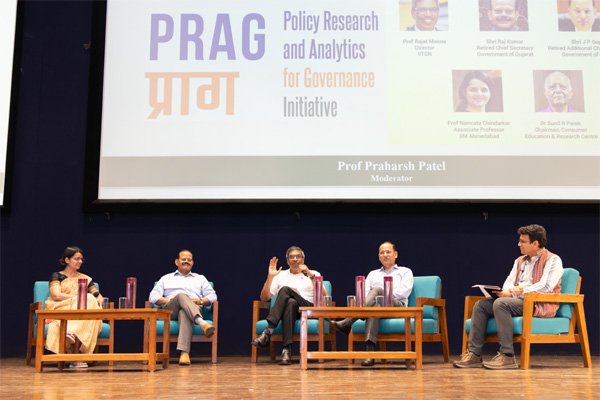
Bridging the Gap: How Data-Driven Analytics are Reshaping Agricultural Governance
In an era where agricultural challenges—from climate volatility to supply chain inefficiencies—are becoming increasingly complex, the traditional methods of policy formulation are facing a critical inflection point. At the forefront of this shift is a new initiative from the Indian Institute of Technology (IIT) Gandhinagar, known as the Policy Research and Analytics for Governance (PRAG). By focusing on the intersection of advanced technology, empirical evidence, and grounded research, this initiative aims to modernize how governments design and implement interventions that directly impact the rural economy and the farming sector.
The core philosophy behind PRAG is simple yet transformative: move away from top-down directives and toward evidence-based policy experiments. Experts involved in the project emphasize that before any large-scale agricultural scheme is rolled out, it must undergo rigorous pilot testing and granular data analysis. By treating policy interventions as scientific experiments, policymakers can identify potential bottlenecks, assess economic feasibility, and measure actual outcomes before committing public funds to nationwide programs.
Leveraging AI and Integrated Datasets for Precision Governance
The technical backbone of the PRAG initiative lies in its commitment to utilizing "smart" data to drive decision-making. In the agricultural context, this means moving beyond broad, aggregate statistics to granular, farm-level insights. The panel of experts associated with the initiative has highlighted several key technological levers that could revolutionize state-level governance.
One of the most promising avenues is the use of AI-powered analytics to process vast amounts of agricultural data. When integrated with smart-meter data—which tracks energy usage at the irrigation pump level—policymakers can gain a real-time understanding of water consumption patterns and electricity demand across different cropping zones. This data-driven approach allows for more efficient power allocation and helps in identifying regions where water stress is becoming acute, enabling localized, preemptive interventions rather than reactive crisis management.
Furthermore, the proposed Gujarat Policy Innovation Lab aims to create a centralized, integrated governance dataset. By breaking down the information silos between departments—such as agriculture, irrigation, finance, and meteorology—governments can create a holistic view of the rural landscape. This integration is essential for creating outcome-based evaluation frameworks, where the success of a policy is judged not by the amount of money spent, but by measurable improvements in crop yields, farm income stability, and resource conservation.
Moving from Theory to Practice: The Role of the Policy Innovation Lab
The transition from academic research to real-world impact is the primary goal of the proposed Policy Innovation Lab. The concept focuses on creating a "sandbox" environment where new agricultural policies can be stress-tested against real-world constraints. This approach acknowledges that a policy that looks perfect on a spreadsheet may fail due to logistical, cultural, or environmental factors that only emerge in the field.
By engaging with stakeholders—including farmers, agricultural extension officers, and local cooperatives—the lab seeks to ensure that technology is not just imposed from above but is grounded in the reality of rural life. This collaborative framework is designed to facilitate iterative improvements. If a digital platform for crop insurance or a new subsidy distribution model shows flaws during the pilot phase, the lab provides the infrastructure to refine the algorithm or the delivery mechanism before it reaches a larger population. This reduces the risk of widespread failure and ensures that digital transformation in agriculture is both equitable and effective.
What This Means for Farmers
For the average farmer, the shift toward "smarter" governance represents a potential move toward more responsive and efficient support systems. Here are the practical implications and economic consequences of this technological transition:
- Reduced Administrative Burden: As governance becomes more integrated, farmers may experience a reduction in the red tape associated with accessing subsidies, insurance payouts, and government grants. Digitized, outcome-based systems are designed to minimize manual verification and speed up service delivery.
- Improved Resource Allocation: Granular data analytics can lead to better management of essential inputs like electricity and water. For farmers, this means more reliable infrastructure support, as policy interventions become targeted toward solving specific regional issues rather than applying "one-size-fits-all" solutions.
- Risk Mitigation: By testing policies in a sandbox environment, the government can better identify and mitigate risks associated with new agricultural programs. Farmers stand to benefit from more stable policy environments where the risk of sudden, ineffective, or harmful changes is significantly lowered.
- Actionable Advice for Producers: Farmers should remain open to participating in regional pilots and data-collection initiatives. Engaging with these programs provides a direct channel to communicate real-world challenges to policymakers, ensuring that the "data" being used to drive future decisions accurately reflects the realities of the field.
- Economic Stability: Ultimately, the goal of evidence-based policy is to create a more resilient agricultural economy. By ensuring that government investments are backed by rigorous research and real-time evaluation, the long-term economic prospects for farming communities are strengthened, fostering a more sustainable and productive agricultural sector.