Unusual Wildlife Encounter in Bihar Sparks Public Concern and Safety Debate
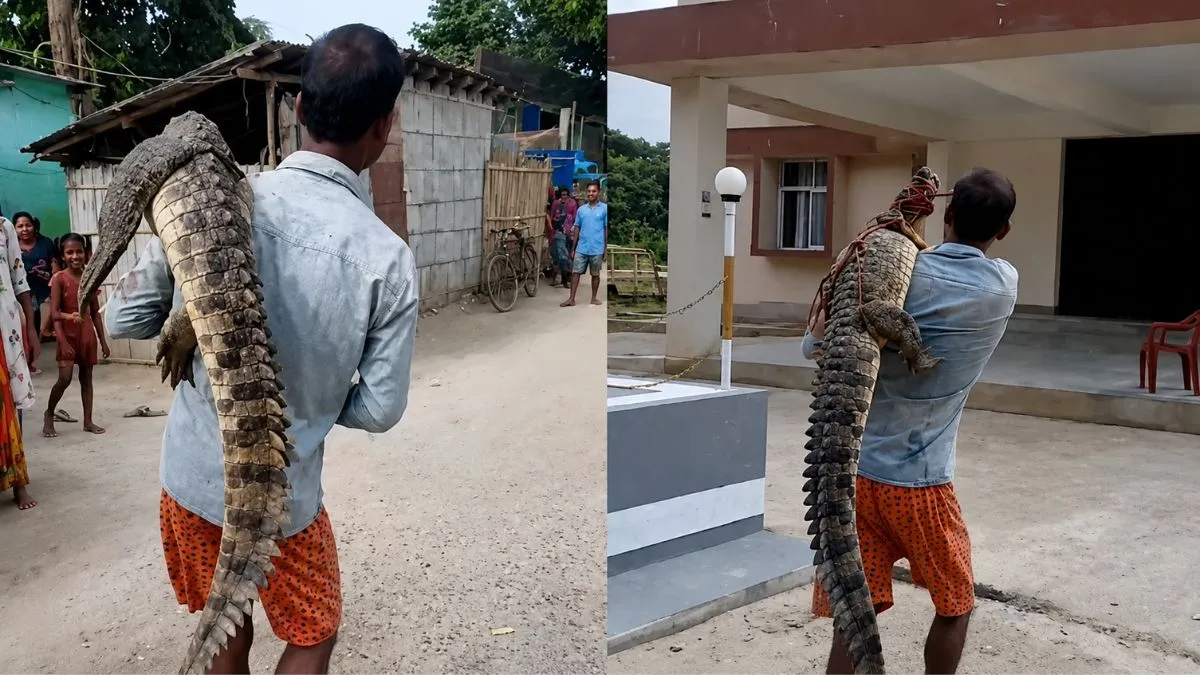
A rural community in the Supaul district of Bihar was recently thrust into the national spotlight following a bizarre and potentially dangerous wildlife encounter. A local man captured the attention of both villagers and law enforcement after he arrived at a police station with a live crocodile draped over his shoulders. The incident, which was captured on mobile devices and subsequently went viral across social media platforms, has raised significant questions regarding human-wildlife conflict, public safety, and the proper protocols for handling protected species in agricultural zones.
The sequence of events began in a local paddy field, where the reptile was first discovered. In an environment typically dominated by rice cultivation, the unexpected appearance of a predator—often associated with the region's riverine ecosystems—triggered immediate alarm among local farmers and laborers. As word of the discovery spread, the site of the find drew a crowd of hundreds, creating a chaotic environment that posed risks to both the onlookers and the animal itself. Rather than alerting forest department officials or wildlife rescue experts, the individual involved chose to take physical custody of the crocodile, eventually transporting the animal to the local police station.
The Ecological Context of Human-Wildlife Conflict in Paddy Fields
The presence of crocodiles in agricultural landscapes is not entirely unprecedented, particularly in regions with interconnected water bodies, irrigation canals, and floodplains. During monsoon seasons or periods of high water levels, these reptiles can migrate from their primary habitats into irrigation networks, eventually finding their way into flooded paddy fields. For farmers, this presents a unique set of challenges. Paddy cultivation requires constant maintenance, often involving workers wading into shallow, murky water—a scenario that drastically increases the risk of accidental encounters with wildlife.
Agricultural experts note that such incidents are becoming more frequent as natural habitats are encroached upon or modified by infrastructure projects. When a predator enters a field, the natural instinct of the local population is often one of fear, which can lead to panicked responses. The Bihar incident highlights a critical gap in local emergency response protocols. While the individual’s actions were framed by some as a display of bravado, wildlife conservationists emphasize that handling wild animals without professional training is fraught with danger. Crocodiles, even smaller specimens, possess significant bite force and defensive instincts that can lead to severe injury to human handlers, while the stress of capture can be fatal to the animal.
Establishing Proper Response Protocols for Rural Communities
The viral nature of the incident has prompted a broader discussion among agricultural authorities and wildlife agencies regarding how rural communities should react to such discoveries. Standard operating procedures dictate that when a wild animal is found in a non-natural habitat, the immediate priority must be the safety of the public. This involves cordoning off the area and maintaining a safe distance until professional rescue teams from the Forest Department can arrive.
Attempting to capture, transport, or "parade" wildlife—as seen in the Supaul incident—is not only a violation of safety norms but can also lead to legal complications under wildlife protection statutes. These laws are designed to prevent the harassment of animals and to ensure that rescue operations are conducted by personnel who can provide the necessary medical assessment and safe relocation. Relying on local expertise or untrained volunteers often results in poor outcomes for the biodiversity of the region and fails to address the underlying cause of the animal’s presence in the farm sector.
What This Means for Farmers
For farmers working in proximity to riverbanks or flood-prone areas, this incident serves as a stark reminder of the importance of proactive safety measures. The economic and physical risks associated with wildlife encounters are significant, and farmers should adopt the following practices:
- Prioritize Reporting: Always keep contact information for the local Forest Department or Wildlife Rescue hotlines readily available. In the event of a sighting, reporting the location immediately is more effective than attempting personal intervention.
- Maintain Awareness: During peak irrigation periods or following heavy rainfall, exercise heightened caution when entering fields. Use tools, such as long sticks, to probe water or dense vegetation before stepping into areas with low visibility.
- Community Safety Protocols: Village committees should establish clear guidelines for managing wildlife sightings. This includes educating laborers on how to identify potential threats and ensuring that crowds do not gather, as large, noisy groups can provoke defensive behavior in wild animals.
- Understand Legal Boundaries: Be aware that many species of crocodiles and other reptiles are protected by law. Handling, harming, or keeping these animals can lead to severe legal penalties. Always defer to state-sanctioned wildlife authorities to manage the situation, ensuring both the farmer's legal safety and the protection of the local ecosystem.
While the Supaul incident concluded without an immediate tragedy, it underscores the need for better integration between agricultural communities and wildlife management agencies. As farming practices evolve, so too must the strategies for coexisting with the wildlife that shares the rural landscape.