Concerns Raised Over Accuracy of India's Agricultural Yield Estimates
A recent report has brought the reliability of India’s official foodgrain production data into question. According to the findings, there are significant discrepancies in how agricultural yields are measured across the country, casting doubt on the government's claims of record-breaking foodgrain production. The investigation, as highlighted by Down To Earth, centers on the methodology behind Crop Cutting Experiments (CCEs).
The National Statistical Office (NSO) report indicates that nearly one out of every four of these experiments failed to adhere to established scientific standards. Given that these estimates serve as the foundation for critical national policies, these findings suggest a potential gap between official statistics and the reality of agricultural output in the field.
Understanding Crop Cutting Experiments
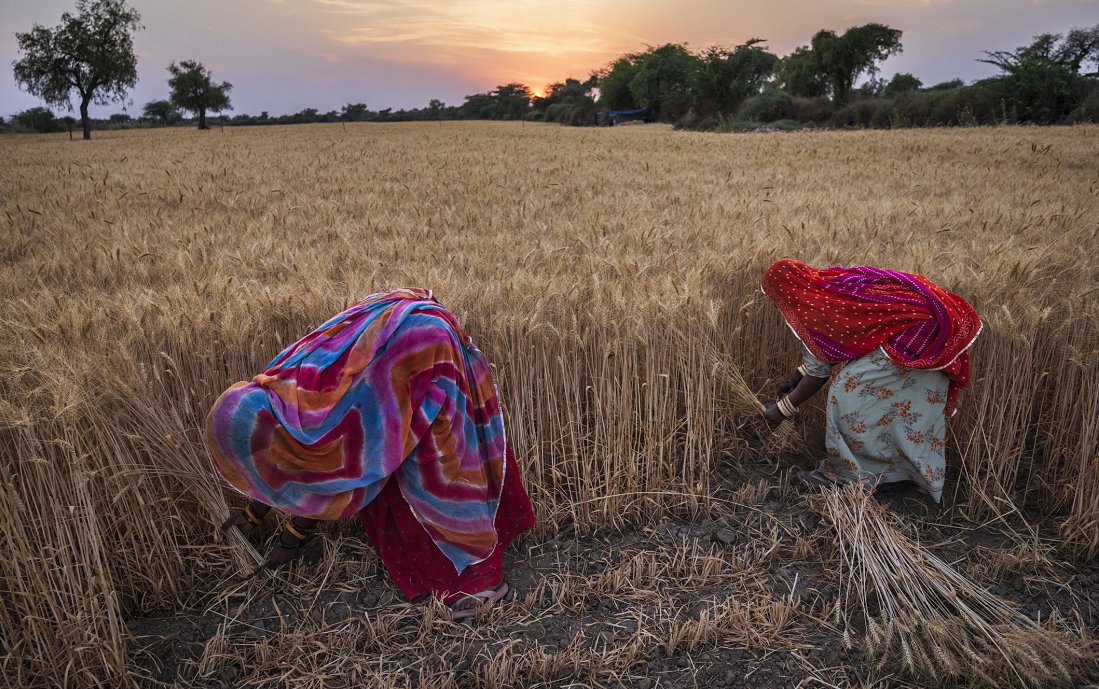
To understand why these findings are significant, it is necessary to recognize the role of Crop Cutting Experiments. These are systematic field trials used by authorities to estimate the average yield of crops in a specific area. By harvesting a small, representative portion of a field, officials calculate the expected output for the entire region.
These calculations are not merely academic; they are essential tools for government decision-making. The data derived from these experiments informs several vital sectors:
- Food Procurement: Determining how much grain the government needs to purchase from farmers to maintain the public distribution system.
- Food Security: Assessing the country's ability to feed its population and identifying potential shortages.
- Trade Policy: Deciding on import and export regulations based on domestic surplus or deficit projections.
- Crop Insurance: Calculating payouts for farmers when yields fall below specific thresholds due to weather or other disasters.
Why Scientific Methodology Matters
The NSO report highlights that when nearly 25 percent of these experiments deviate from scientific norms, the integrity of the resulting data is compromised. Scientific rigor in these experiments involves precise selection of harvest plots, accurate weighing of the produce, and consistent reporting. When these steps are bypassed or performed incorrectly, the margin of error increases, potentially leading to inflated or inaccurate production figures.
The report suggests that the reliance on flawed data could have a cascading effect on agricultural governance. If the data used to calculate procurement targets or insurance claims is inaccurate, it may lead to policy decisions that do not align with the actual needs of the agricultural sector or the broader food security requirements of the nation.
Implications for National Policy
The scrutiny of these estimates raises concerns about the transparency and accuracy of the data that informs the country's agricultural strategy. Because these figures guide high-stakes decisions—ranging from how the government manages food stocks to how it compensates producers for crop failures—any systemic failure in the collection of this data is a matter of national importance.
While the government has frequently cited record foodgrain production, the NSO report serves as a cautionary note. It suggests that without strict adherence to scientific protocols in data collection, the official narrative of agricultural performance may not be fully supported by the ground-level evidence gathered through standardized testing methods.
As stakeholders in the agricultural and economic sectors continue to analyze these findings, the focus remains on whether the current mechanisms for estimating crop yields are sufficient to provide an accurate picture of India’s food landscape. The report from Down To Earth emphasizes that the credibility of policies regarding food security, trade, and insurance is inherently linked to the scientific integrity of the underlying statistical data.