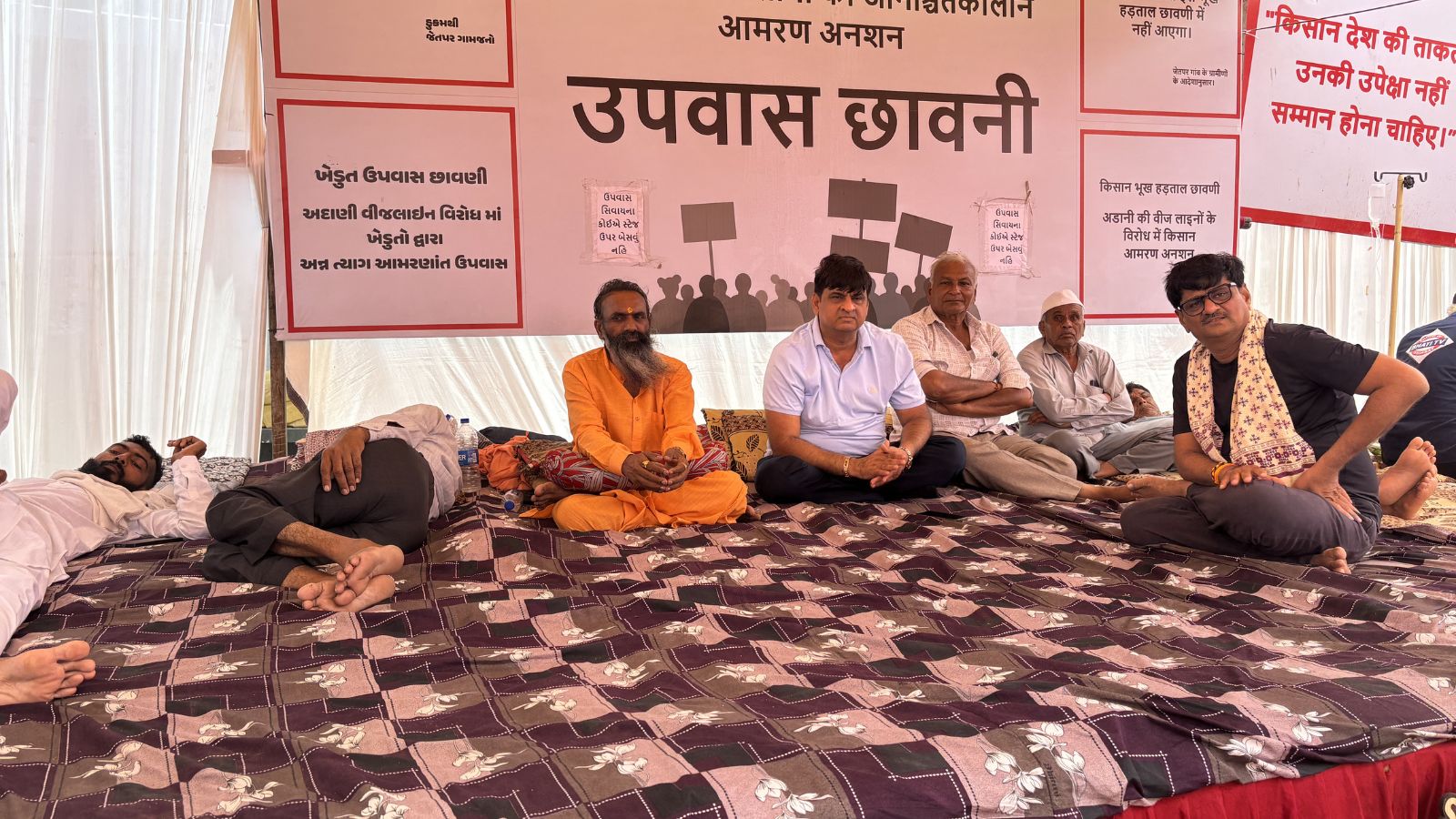
Massive Farmers’ Protest in Gujarat Demands Fair Land Acquisition Compensation
In a significant display of collective action, farmers from across Gujarat’s Morbi district and surrounding regions staged a large-scale padayatra (foot march) this Tuesday, signaling growing unrest over land acquisition policies. Thousands of participants, representing a demographic balance of men and women from over 300 villages in Morbi and 50 additional villages across 12 other districts, marched 3.5 kilometers to present their grievances directly to the local administration.
The demonstration, which commenced at Mahendranagar Chokdi and concluded at the collector’s office, serves as a focal point for a long-standing dispute between landholders and governmental authorities. At the heart of the movement is a demand for a fundamental restructuring of how agricultural land is valued when acquired for industrial or infrastructure development. The protesters are calling for either a 400 percent increase in compensation or, alternatively, a shift toward a recurring monthly rental model for the use of their land.
The Economic Drivers Behind the Demand
The core of the farmers' dissatisfaction stems from the widening gap between current government compensation rates and the market value of land in a rapidly industrializing region. As Gujarat continues to attract large-scale industrial projects, the pressure on agricultural land has intensified, often leading to acquisitions that farmers argue do not reflect the long-term loss of their primary livelihood.
Agricultural economists note that land acquisition often fails to account for the "opportunity cost" of farming. When a farmer surrenders ancestral land, they are not merely losing a plot of soil; they are losing a perpetual income-generating asset. The demand for a 400 percent compensation increase is intended to bridge this gap, ensuring that the payout provides enough capital for the displaced family to relocate or pivot to new economic activities without falling into poverty. The alternative proposal—a monthly rental system—reflects a desire for long-term financial security, mirroring the consistent cash flow that successful farming operations provide.
Infrastructure Expansion vs. Agricultural Sovereignty
The participation of farmers from over 12 districts beyond Morbi highlights that this is not an isolated local grievance but a systemic issue affecting the wider agrarian landscape of Gujarat. The involvement of both men and women in large numbers underscores the domestic and economic impact that land loss has on rural households. In many of these communities, women play a central role in farm management and labor; therefore, the decision to participate in the padayatra reflects the threat they perceive to their collective household security.
The march to the collector’s office was designed to force a formal dialogue with state authorities. By bringing together such a diverse group of stakeholders, the organizers have effectively signaled to policymakers that the current framework for land acquisition is viewed as outdated and insufficient. The protest serves as a reminder to the government that infrastructure development cannot come at the cost of rural economic stability and that land-use policies must be updated to reflect the realities of modern agrarian economics.
What This Means for Farmers
For farmers currently facing potential land acquisition or those in regions slated for industrial development, this protest offers several critical takeaways:
- Collective Bargaining Power: The success of the padayatra in mobilizing hundreds of villages demonstrates that individual landholders are significantly more effective when they organize across district lines. Unified advocacy increases the likelihood of forcing a review of compensation policies.
- Alternative Models of Compensation: The push for a "monthly rent" model represents a shift in thinking from one-time payouts to sustainable income streams. Farmers should research and advocate for lease-based agreements that allow them to retain land ownership while generating revenue, rather than opting for a total buyout.
- Legal and Administrative Vigilance: The demand for a 400 percent increase in compensation is a benchmark based on the perceived current market value. Farmers are encouraged to consult with legal experts and agricultural unions to ensure that any land valuation conducted by the government accounts for future growth potential rather than just historical or current agricultural yield.
- Inclusion and Representation: The active participation of women in this march highlights the importance of keeping all household members informed and involved in land-related decisions. When families present a united front, their case before local authorities carries greater weight and legitimacy.