Emergency Rescue Operations Underway as Severe Flooding Grips Gujarat
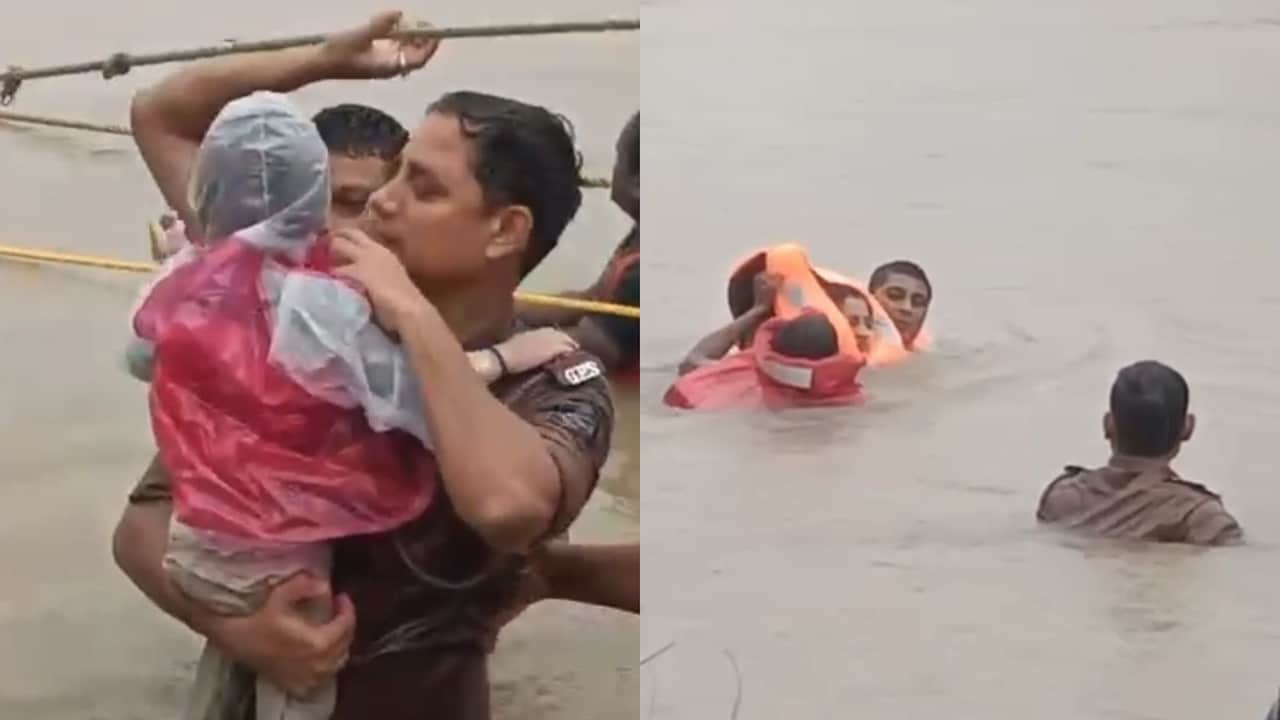
The state of Gujarat is currently grappling with a severe monsoon crisis, as relentless rainfall has transformed rural transport corridors into treacherous waterways. In a harrowing incident that has since circulated widely on social media, passengers of a public transit bus were forced to seek refuge on the vehicle’s roof after it became stranded in rising floodwaters. The situation, which saw men, women, and children waiting for hours in precarious conditions, highlights the extreme logistical and safety challenges currently facing the region’s agricultural communities and rural infrastructure.
Local authorities and emergency response teams were mobilized to conduct a high-stakes rescue operation, utilizing specialized equipment to reach the stranded commuters. The footage of the incident has served as a sobering reminder of the volatility of the current monsoon season, which has seen unprecedented precipitation levels in several districts. As low-lying fields and transport arteries remain submerged, the focus of the state government has shifted from routine disaster management to urgent life-saving interventions.
Infrastructure Vulnerability and Agricultural Impact
The flooding of primary and secondary rural roads underscores a broader issue regarding the resilience of infrastructure in the face of increasingly erratic weather patterns. For many agricultural regions in Gujarat, these roads are the lifeblood of the economy, serving as the only conduits for moving perishable produce to markets and essential inputs, such as fertilizers and seeds, to farms. When these routes are compromised, the entire supply chain experiences a cascading failure.
Beyond the immediate human danger, the flooding presents long-term agronomic concerns. Sustained waterlogging in agricultural fields can lead to significant crop loss, particularly for standing kharif crops. Excessive soil moisture levels often result in root rot, nutrient leaching, and an increased susceptibility to fungal diseases. Furthermore, the destruction of rural transport infrastructure complicates the ability of farmers to inspect their fields or access emergency veterinary services for livestock, potentially exacerbating the economic blow dealt by the weather event.
Logistical Disruptions to the Rural Economy
The disruption of transit services is not merely a passenger safety issue; it represents a significant bottleneck for the rural economy. With transit vehicles stranded and road networks blocked, the movement of labor, machinery, and harvested goods has come to a standstill in several affected sub-districts. In the immediate aftermath of such events, the local economy often experiences a "wait-and-see" period, where market activity drops significantly due to the inability of stakeholders to reach collection centers or processing facilities.
Agricultural experts note that this cycle of flooding also delays the implementation of post-harvest management strategies. Farmers who are unable to access their land due to flooded access roads may face difficulties in clearing debris or applying necessary drainage techniques, which are critical to mitigating the impact of heavy rains on soil health. As the climate continues to shift, the reliance on outdated infrastructure becomes a critical vulnerability that may require substantial investment in flood-resilient engineering and improved rural drainage systems.
What This Means for Farmers
The recent events in Gujarat serve as an urgent call to action for the farming community regarding emergency preparedness and risk mitigation. Farmers are advised to take the following steps to protect their livelihoods during extreme weather events:
- Prioritize Personal Safety: As demonstrated by the bus incident, attempting to traverse flooded roads is extremely dangerous. Farmers should avoid travel during peak monsoon surges and maintain clear communication with local disaster management cells to receive real-time updates on road closures.
- Monitor Soil Saturation Levels: In the wake of heavy flooding, assess fields for drainage blockages. Clearing irrigation channels and ensuring that runoff has a clear path away from high-value crop areas can significantly reduce the duration of waterlogging.
- Review Insurance Coverage: Ensure that all crop insurance policies are active and that documentation regarding damage—such as photographs and dates of inundation—is meticulously maintained. This is essential for filing claims in the event of total crop failure.
- Secure Livestock and Assets: Move livestock to higher ground well in advance of forecasted heavy rainfall and ensure that fodder and emergency medical supplies are stored in elevated, waterproof locations.
- Collaborate on Infrastructure Maintenance: Engage with local village councils (Gram Panchayats) to identify and repair drainage bottlenecks in local road networks, as these are often the first points of failure that isolate farming communities during the monsoon season.
While the immediate rescue of the bus passengers is a relief, the broader challenges posed by the flooding remain. By focusing on resilient infrastructure and proactive disaster planning, rural communities can better weather the volatile climate conditions that are becoming increasingly common.