
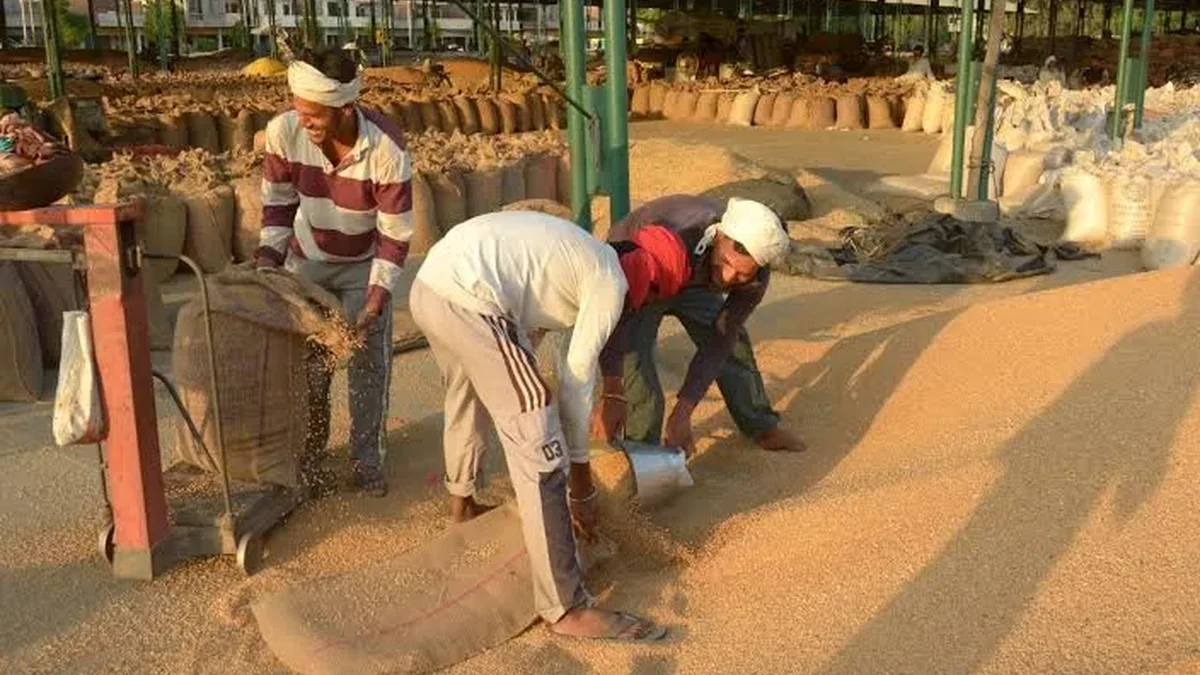
India's Decentralised Grain Storage Plan in the Cooperative Sector is actively transforming rural post-harvest management by placing Primary Agricultural Credit Societies (PACS) at the center of local infrastructure. Launched as a pilot on May 31, 2023, the initiative shifts the focus away from distant, centralized warehouses directly to village-level cooperative institutions. This allows farmers to store grain safely near their farms, access procurement services, utilize basic processing, and rent necessary farm machinery.
Rising Production Demands Stronger Village Storage
The requirement for localized storage has intensified alongside record-breaking harvests across the country. Key production and food distribution data highlight the scale of this requirement:
- Total Foodgrain Production: Estimated at 376.563 million tonnes under the Third Advance Estimates for 2025-26, compared to 357.732 million tonnes the previous year—a rise of nearly 18.8 million tonnes (5.3%).
- National Food Security Act (NFSA), 2013: Covers approximately 80 crore people, requiring highly efficient procurement, storage, transport, and distribution networks.
- Post-Harvest Challenges: A lack of accessible storage often forces immediate selling during weak market price periods, alongside increased transport costs and higher risk of crop deterioration.
Preventing Distress Sales and Reducing Post-Harvest Costs
Immediately after harvest, market prices can fluctuate significantly. Safe, localized storage gives farmers the flexibility to retain their produce rather than offloading everything at once, allowing them to wait for more favorable market conditions. Furthermore, establishing facilities closer to production centers cuts down transport distances, lowers multiple handling stages, and reduces grain wastage.
Convergence of Key Schemes for PACS Rural Hubs
Rather than building isolated godowns, the initiative integrates multiple central government programs to develop comprehensive rural agricultural hubs at the PACS level:
- Agriculture Infrastructure Fund (AIF): Provides financing and interest-subvention support for developing post-harvest infrastructure.
- Agricultural Marketing Infrastructure (AMI): Delivers capital subsidy support for eligible storage structures.
- Sub Mission on Agricultural Mechanization (SMAM): Facilitates the setup of Custom Hiring Centres, enabling farmers to rent tractors, tillers, harvesters, and other machinery.
- PM Formalisation of Micro Food Processing Enterprises (PMFME): Supports the development and formalization of micro food-processing operations.
Expanded Role of PACS in the Rural Economy
Traditionally focused on short-term rural credit and financial services, PACS are expanding into multipurpose service centers. Under the new model, PACS facilitate grain cleaning, sorting, and drying before storage to enhance crop marketability and reduce spoilage risks. Additionally, these local units support procurement operations on behalf of State agencies and the Food Corporation of India (FCI), while integrating Fair Price Shops for local food distribution.
Source: Organiser Weekly


