
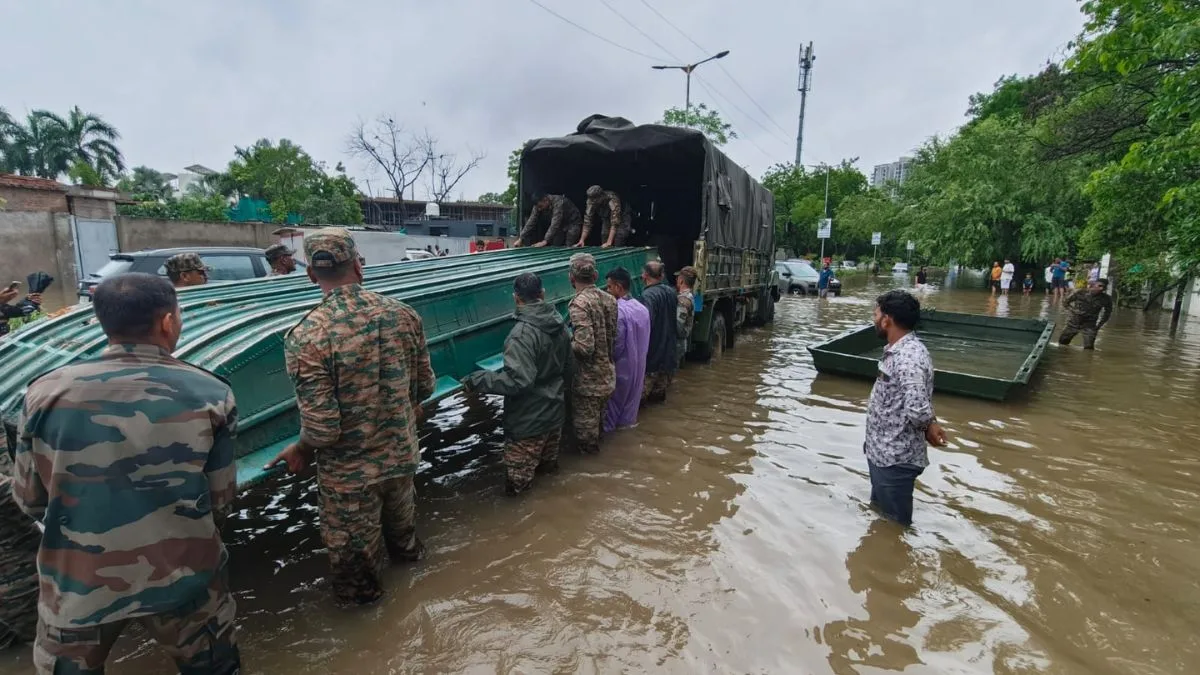
Emergency Response Intensifies as South Gujarat Battles Severe Flooding
South Gujarat is currently grappling with a severe hydrological crisis following days of relentless, torrential rainfall that has inundated vast stretches of low-lying agricultural land and urban centers. The regions of Surat and Valsad have borne the brunt of the deluge, leading to widespread displacement and the activation of large-scale emergency response protocols. As water levels in major rivers continue to rise, the Indian Army, alongside specialized teams from the National Disaster Response Force (NDRF), has launched comprehensive rescue and relief operations to safeguard thousands of citizens trapped by the encroaching floodwaters.
The intensity of the monsoon precipitation has overwhelmed local drainage infrastructure, turning arterial roads into riverbeds and cutting off access to numerous rural interior villages. Local authorities have been working around the clock to relocate residents from vulnerable floodplains to higher ground and designated state-run shelters. The deployment of the military signals the gravity of the situation, as ground-level rescue teams utilize specialized amphibious equipment and inflatable rafts to navigate submerged neighborhoods where standard vehicles have become useless.
Infrastructure Strain and Agricultural Vulnerability
The agricultural landscape of South Gujarat, known for its fertile soil and high-value cash crops, is facing significant distress. The current flooding event coincides with critical stages of the crop cycle, raising concerns regarding long-term yield losses and soil degradation. Excessive water saturation poses an immediate threat of root rot, nutrient leaching, and the physical uprooting of seedlings, particularly in the low-lying plains where water stagnation is most severe.
Beyond the immediate impact on standing crops, the infrastructure supporting the region’s agribusiness sector has suffered heavy damage. Farm-to-market connectivity—a vital component of the local economy—is severely disrupted as rural roads remain submerged or obstructed by debris. The logistical breakdown threatens the supply chain for perishable commodities, which are highly sensitive to transport delays. Furthermore, the saturation of the topsoil has increased the risk of localized landslides in undulating terrains, posing a multifaceted challenge for farmers attempting to secure their assets and livestock during the ongoing weather event.
Resource Allocation and Disaster Mitigation Efforts
The coordination between district administrations and central disaster management agencies has been the primary focus of the crisis response. Temporary relief camps have been established to provide food, medical assistance, and basic necessities to displaced farming families. State officials are closely monitoring dam levels and discharge rates, as controlled releases are often necessary to manage the pressure on hydraulic structures, even while they exacerbate downstream flooding.
The focus remains on "zero casualty" operations, with search and rescue teams prioritizing the evacuation of the elderly, children, and livestock. While the immediate priority is life safety, municipal authorities are already beginning to formulate preliminary damage assessment strategies. These assessments will be crucial for determining the extent of the disaster’s impact on the regional economy once the water begins to recede and the risk of further precipitation subsides.
What This Means for Farmers
For the farming community in South Gujarat, the immediate aftermath of this flood event will require a disciplined and cautious approach to recovery. Farmers are advised to prioritize the following actions to mitigate long-term losses:
- Sanitation and Disease Control: Once floodwaters recede, priority must be given to clearing debris from fields and identifying stagnant water pockets that could become breeding grounds for pests and waterborne diseases affecting both crops and livestock.
- Soil Health Assessment: Prolonged waterlogging can lead to the depletion of essential nutrients and the compaction of topsoil. Farmers should consult with local agricultural extension offices regarding soil testing and potential corrective measures, such as the application of micronutrients or drainage improvement techniques, before attempting replanting.
- Livestock Management: Ensuring the health of cattle and other livestock is critical, as they are highly susceptible to foot-rot and respiratory infections following exposure to contaminated floodwaters. Immediate veterinary consultation is recommended for any animals showing signs of distress.
- Documenting Damage: To facilitate future insurance claims or potential government compensation, farmers should document all damage to equipment, storage facilities, and crops with photographs or video evidence before starting the cleanup process.
- Strategic Replanting: If crop loss is total, farmers should work closely with agricultural experts to identify short-duration or flood-tolerant crop varieties that may be suitable for late-season planting, provided the window for the monsoon season remains open.
The road to recovery for the agricultural sector in South Gujarat will likely be protracted. However, by focusing on systematic damage evaluation and utilizing available government support programs, the farming community can better position itself to recover from the economic disruptions caused by this extreme weather event.


