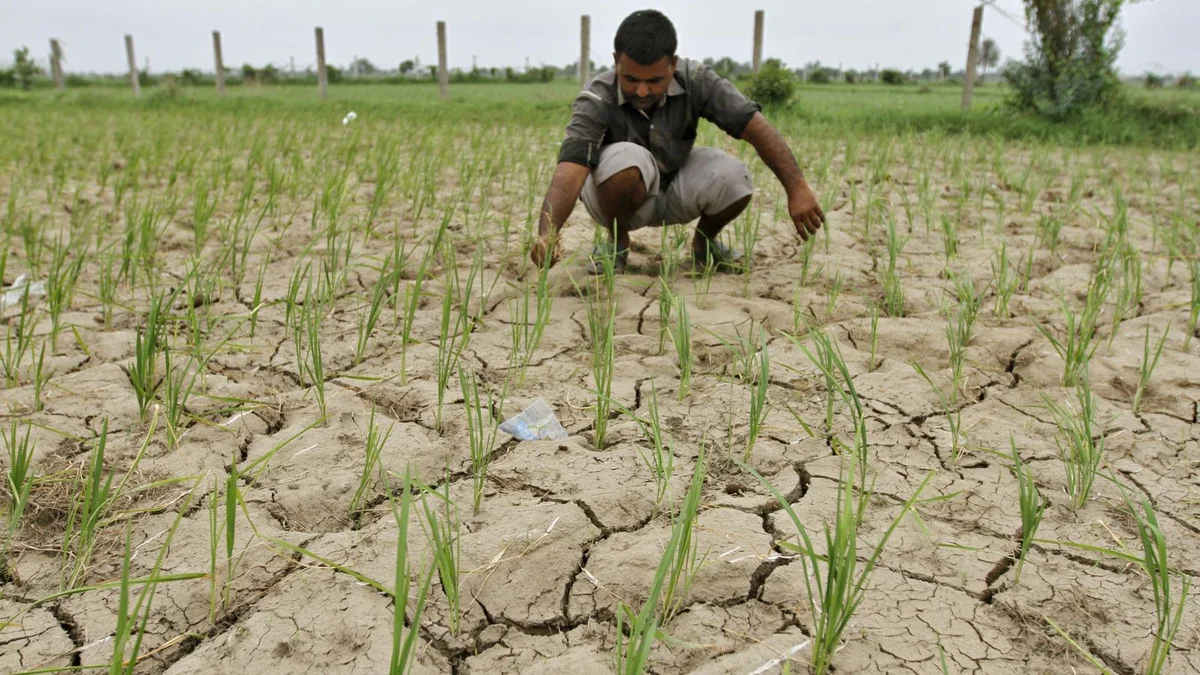
Cotton growers across Gujarat are grappling with a deepening financial crisis as the cost of cultivation continues to climb while market prices remain volatile. What was once a reliable source of income for many households is increasingly becoming a financial burden, with farmers struggling to recover the significant capital invested in seeds, fertilizers, and agricultural labour.
The economic pressure is particularly acute for farmers in Saurashtra and North Gujarat, where the gap between investment and returns has widened. According to data from the Union Ministry of Agriculture, the average model price of cotton has seen a marked decline over the last four years. While the average model price was ₹8,829 per quintal in the 2022–23 season, it dropped to ₹7,249 per quintal by 2025–26, representing a decrease of ₹1,580 per quintal.
The market experienced its sharpest decline during the 2023–24 season, when the average price plummeted to ₹7,038 per quintal. Although there has been a marginal recovery in subsequent years, current prices remain significantly lower than the levels seen in 2022–23, leaving many cultivators unable to break even after a season of hard work.
Gujarat cotton farmers: What This Means for Farmers
The current market situation carries serious implications for the long-term viability of cotton farming in the region:
- Rising Debt Burden: Many farmers have relied on loans from banks and cooperative societies to fund their cultivation. With market returns failing to cover production costs, repaying these debts has become an increasing challenge, potentially affecting their ability to secure credit for future seasons.
- Investment Uncertainty: Because farmers must commit to expenses like seeds and labour before the harvest, the lack of guaranteed returns makes it difficult to plan for the next cycle. This uncertainty is forcing some to reconsider their total land allocation for cotton.
- Inadequate Procurement Concerns: Farmers have expressed concerns regarding the effectiveness of current government procurement processes, alleging that market prices are further impacted by the actions of some traders. There is also a growing sentiment that existing support prices do not accurately reflect the actual costs involved in modern cotton farming.
The challenges facing the cotton sector extend beyond individual farm losses. As cultivation costs continue to rise without a corresponding increase in market prices, the stability of the entire agricultural supply chain in Gujarat is under pressure. For many, the decision to continue growing cotton has become a difficult choice between maintaining a traditional crop or seeking ways to mitigate the persistent financial risk.
Source: Vibes Of India