🚨 Important Kharif Crop Alert for Gujarat Farmers
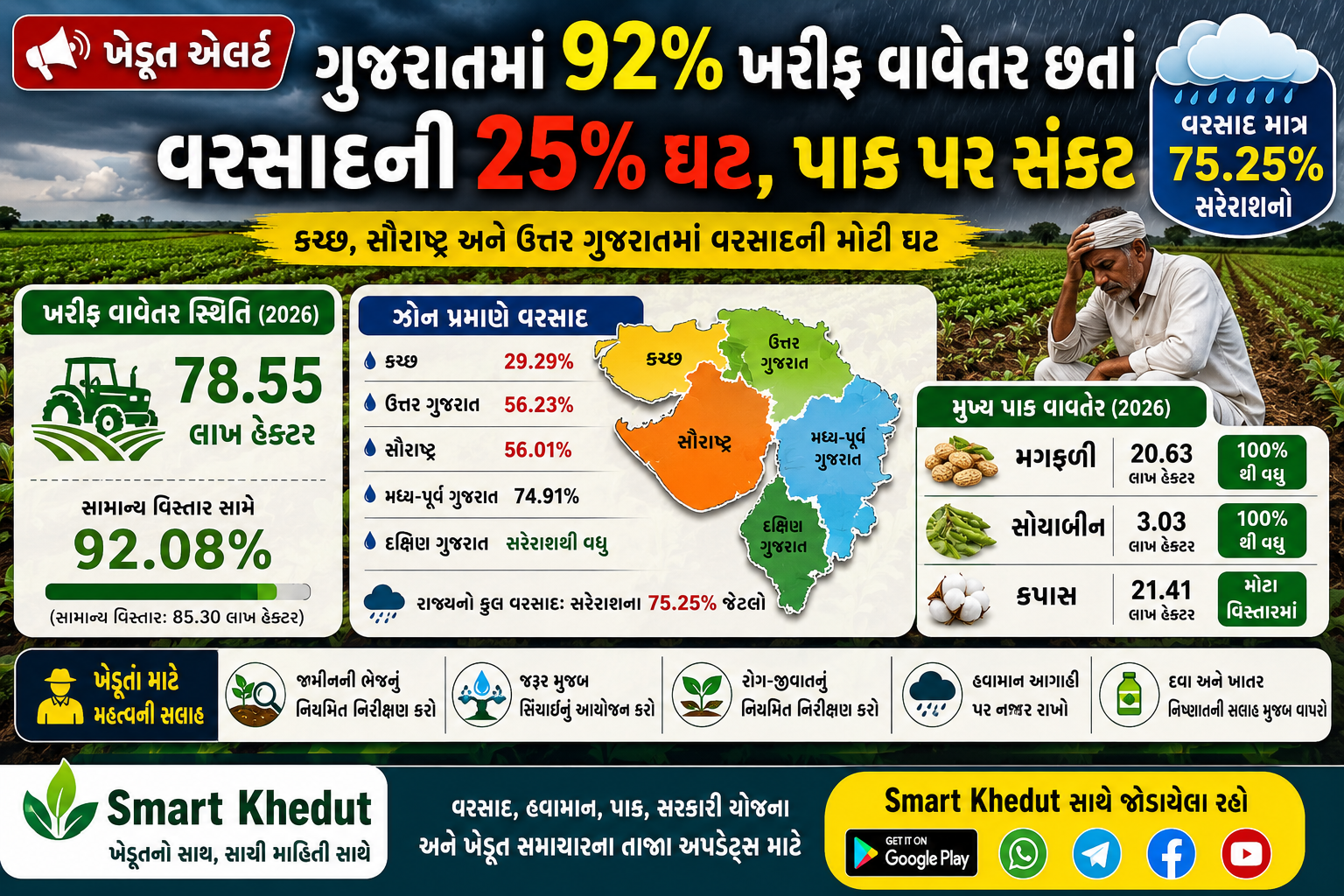
Gujarat's Kharif sowing has reached 92.08% of normal, but rainfall is only around 75.25% of average. Significant deficits in Kutch, Saurashtra and North Gujarat are raising concerns for standing crops.
Gujarat Kharif Sowing Reaches 78.55 Lakh Hectares
Gujarat farmers have covered a large area under Kharif crops during the 2026 season. The latest available figures put total Kharif sowing at approximately 78.55 lakh hectares.
Gujarat's normal Kharif sowing area is around 85.30 lakh hectares. This means the current coverage has reached approximately 92.08% of the normal area.
Strong Sowing but Highly Uneven Rainfall
While sowing progress is strong, rainfall has been highly uneven across Gujarat. Several areas of Kutch, Saurashtra and North Gujarat have experienced significant rainfall deficits.
🌧️ Regional Rainfall Status
- Kutch: Around 29.29% of normal
- North Gujarat: Around 56.23%
- Saurashtra: Around 56.01%
- Central-East Gujarat: Around 74.91%
- South Gujarat: Above normal rainfall
Kutch and Saurashtra Farmers Face Growing Concern
Rainfall shortages in parts of Kutch and Saurashtra can reduce soil moisture, particularly in rain-dependent farming areas. Further rainfall may become important for maintaining crop moisture during key growth stages.
Groundnut Sowing Above Normal
Groundnut sowing in Gujarat has reached approximately 20.63 lakh hectares, exceeding the normal sowing area.
🥜 Why Rain Matters for Groundnut
Adequate soil moisture is important during flowering and pod-development stages. A prolonged dry spell can increase moisture stress in rain-dependent areas.
Soybean Sowing Also Above 100%
Soybean sowing has also crossed its normal area and is currently around 3.03 lakh hectares.
Soybean requires adequate moisture during its development stages. Farmers in rainfall-deficit areas should keep monitoring soil moisture and crop condition.
Cotton Remains a Major Kharif Crop
Cotton is one of Gujarat's major Kharif crops. This season, cotton has been planted across approximately 21.41 lakh hectares.
Which Districts Have Higher Rainfall Deficits?
Recent rainfall reports indicate that several Gujarat districts have recorded rainfall deficits exceeding 50%.
📍 Areas Facing Higher Deficits
- Devbhumi Dwarka
- Porbandar
- Jamnagar
- Kutch
- Rajkot
- Gir Somnath
- Sabarkantha and Aravalli
South Gujarat Shows a Different Picture
While Kutch, Saurashtra and North Gujarat are facing rainfall shortages, South Gujarat has received above-normal seasonal rainfall. This highlights the highly uneven nature of the 2026 monsoon across the state.
What Should Farmers Watch Now?
👨🌾 Important Farmer Steps
- Regularly check soil moisture.
- Consult local agricultural experts if a long dry spell continues.
- Plan irrigation according to crop and soil requirements.
- Monitor groundnut and soybean for pests and diseases.
- Watch cotton crop growth and soil moisture.
- Check drainage arrangements before heavy rainfall.
- Use pesticides and fertilisers only according to expert advice.
Does Rainfall Deficit Mean Crop Failure?
It would be incorrect to conclude that crops will fail across Gujarat based only on the current rainfall figures. Crop conditions depend on local rainfall, soil type, irrigation availability, crop growth stage and rainfall in the coming weeks.
However, in areas with major rainfall deficits and rain-dependent agriculture, prolonged dry periods can increase crop stress and production risks.
Why September Rainfall Matters
September rainfall can be important during the later stages of the Kharif season. Timely rainfall can help maintain soil moisture for standing crops.
Farmers should focus on district- and taluka-level weather information rather than relying only on state-wide rainfall figures.
🌦️ Weather Advisory
Farmers should use local weather forecasts and agricultural department advisories when making irrigation, crop-protection and drainage decisions. State-wide rainfall averages do not represent conditions in every individual field.
Gujarat Kharif Crop Situation at a Glance
| Indicator | 2026 Status |
|---|---|
| Total Kharif sowing | 78.55 lakh hectares |
| Against normal area | 92.08% |
| State rainfall | Around 75.25% |
| Groundnut sowing | 20.63 lakh hectares |
| Soybean sowing | 3.03 lakh hectares |
| Cotton sowing | 21.41 lakh hectares |
Key Takeaway for Gujarat Farmers
Gujarat has achieved strong Kharif sowing coverage this season, but timely rainfall remains important for maintaining standing crops. Farmers in rainfall-deficit parts of Kutch, Saurashtra and North Gujarat should closely monitor local rainfall, soil moisture and crop condition.
🌾 Smart Khedut Farmer Updates
Follow Smart Khedut for rainfall, weather, crop, government scheme and important Gujarat farmer news updates.
Frequently Asked Questions
How much Kharif sowing has been completed in Gujarat?
Latest available figures put Gujarat's Kharif sowing at around 78.55 lakh hectares, or approximately 92.08% of the normal area.
How much rainfall has Gujarat received?
Available late-August figures indicate that state rainfall is around 75.25% of average.
Which Gujarat regions have the largest rainfall deficits?
Kutch, Saurashtra and North Gujarat are among the regions facing significant rainfall deficits.
How much groundnut has been sown?
Groundnut sowing has reached approximately 20.63 lakh hectares.
Will rainfall deficit cause total crop failure?
Not necessarily. Crop conditions depend on local rainfall, soil moisture, irrigation availability and crop growth stage.
🛡️ Sources & Editorial Note
This article is based on the latest available rainfall and Kharif sowing data and recent credible reporting. Rainfall and sowing figures can change as new official data is released. Farmers should consult local agricultural authorities or qualified experts before making crop-management decisions.