The Gujarat government has officially launched an initiative to explore effective methods for conserving and utilizing the surplus water that flows into the Arabian Sea from major reservoirs each year. This move is focused on the Narmada, Ukai, and Kadana dams, which collectively lose a significant volume of water during the monsoon season.
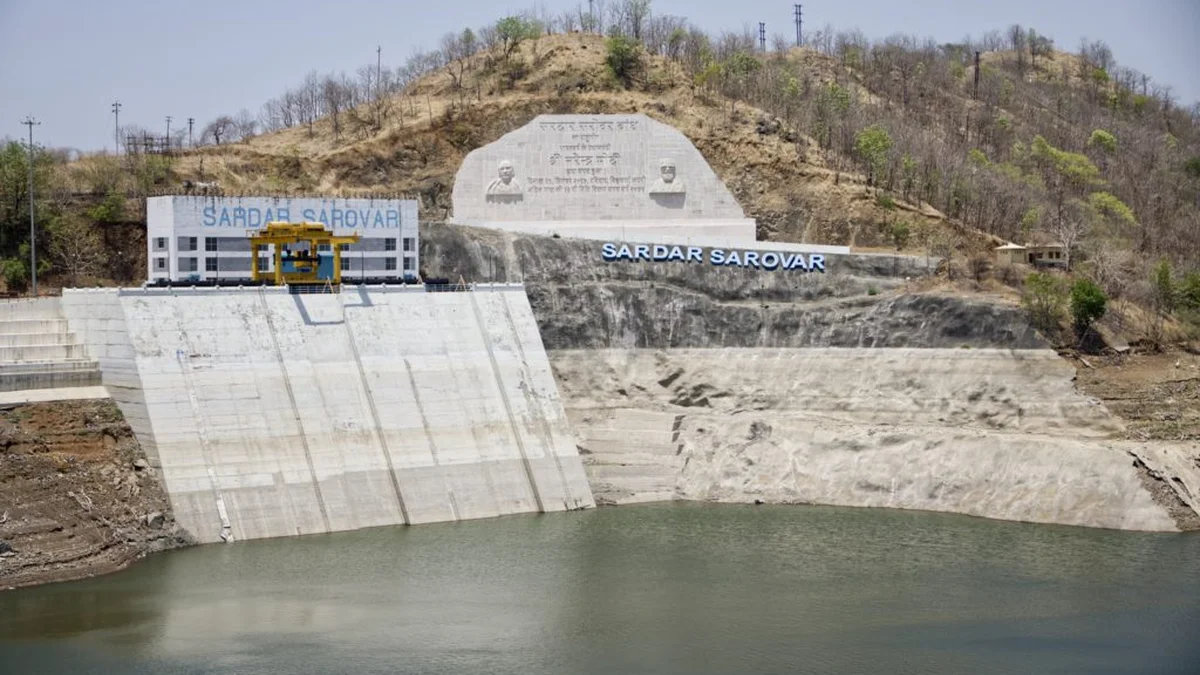
According to official estimates, approximately 15,000 million cubic metres (MCM) of water currently flows into the sea annually from these three critical reservoirs. The breakdown of this discharge highlights the scale of the potential resource: the Sardar Sarovar Dam on the Narmada river accounts for about 9,500 MCM, while the Ukai and Kadana reservoirs contribute more than 3,000 MCM and 2,200 MCM respectively.
The state government is currently evaluating two primary strategies to capture this water. The first approach involves enhancing the storage capacity of existing reservoirs through technical interventions, including dredging. The second strategy focuses on identifying and utilizing existing waterbodies across the region to store water diverted from these dams during periods of excess discharge.
This planning exercise is driven by long-term projections of rising water demand within the state. While the initiative is being framed within the context of supporting industrial growth—specifically for emerging sectors such as semiconductors and data centres—the preservation of such large quantities of water is a significant development for the state's overall water security.
Gujarat surplus water conservation: What This Means for Farmers
The government's focus on conserving 15,000 MCM of water that would otherwise be lost to the sea has several important implications for the agricultural community in Gujarat:
- Long-term Water Security: By exploring ways to store surplus water, the state is effectively looking to increase its total water reserves. Consistent efforts to capture monsoon overflow can potentially lead to more reliable water availability for irrigation in the command areas of these major dams.
- Potential for Better Resource Management: The focus on identifying existing waterbodies for storage may lead to improved local water infrastructure. If successfully implemented, these measures could help in recharging local aquifers and providing secondary water sources for rural areas.
- Strategic Planning for Future Needs: As the government prepares for future demand projections, the prioritization of water conservation ensures that agricultural water needs remain a central part of the state's resource planning, balancing the requirements of both industrial and rural sectors.
The initiative remains in the exploratory phase as officials assess the technical and logistical feasibility of increasing reservoir capacities and optimizing water diversion networks. The goal is to establish a more robust water management system that can withstand the challenges of future demand and climate variability.
Source: Deshgujarat