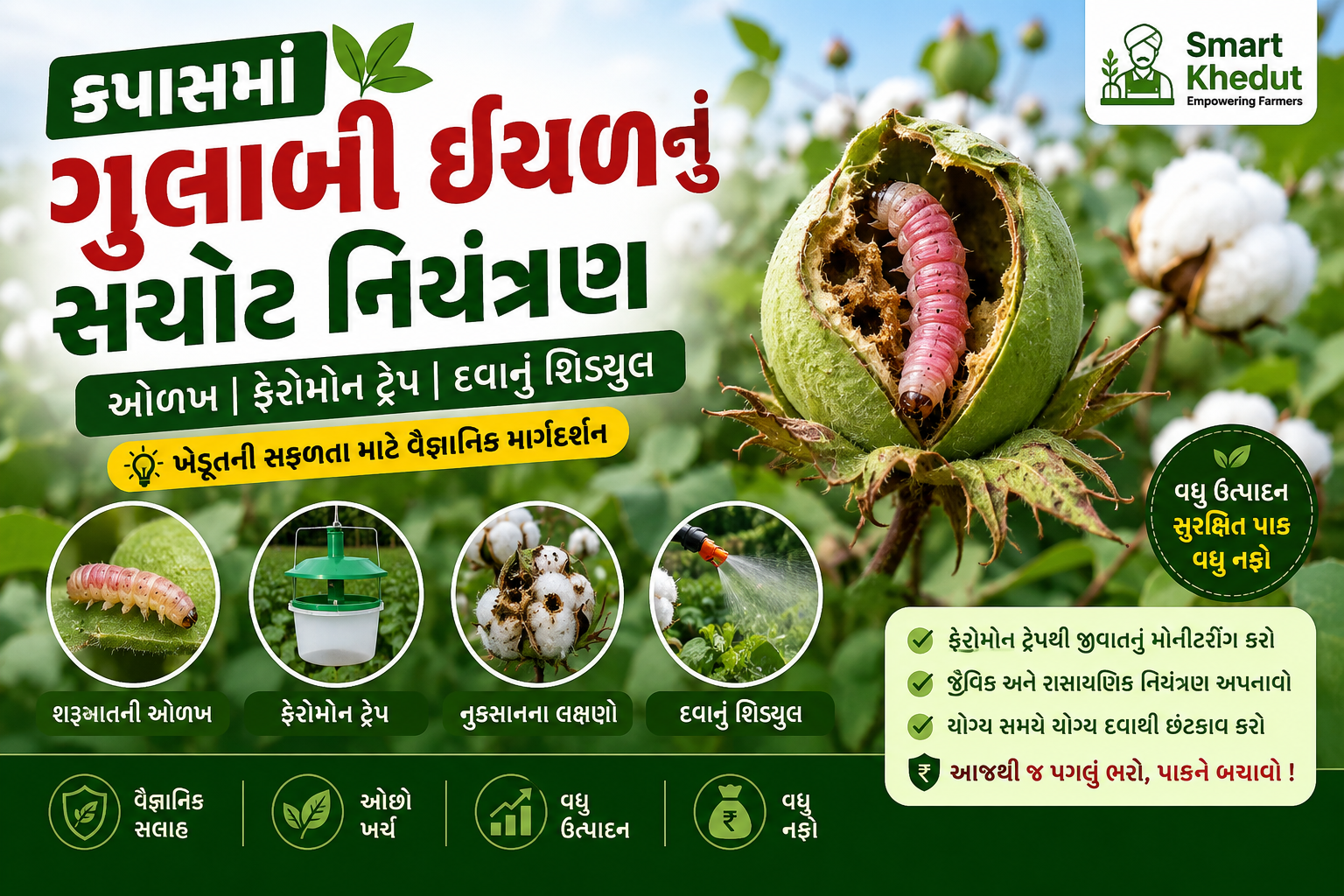
Gujarat is renowned as the 'White Gold' capital of India for its massive cotton production. However, over the past few years, the Pink Bollworm (Pectinophora gossypiella) has emerged as the most devastating pest challenge for cotton farmers. Because this larva causes damage directly inside the developing bolls, identifying its presence from the outside is exceptionally difficult.
If timely pest management is not implemented, farmers can experience a severe 40% to 60% decline in overall cotton yield and fiber quality. In this comprehensive guide, we will examine early identification techniques, the scientific application of Pheromone Traps, and an optimized chemical spray schedule recommended by top agricultural scientists.
📋 Table of Contents
1. How to Identify Pink Bollworm Early?
A unique characteristic of the pink bollworm is that once the eggs hatch, the larvae immediately bore into the cotton buds, flowers, or bolls. This makes direct chemical sprays ineffective against them. Therefore, early detection is the only reliable way to stop an outbreak.
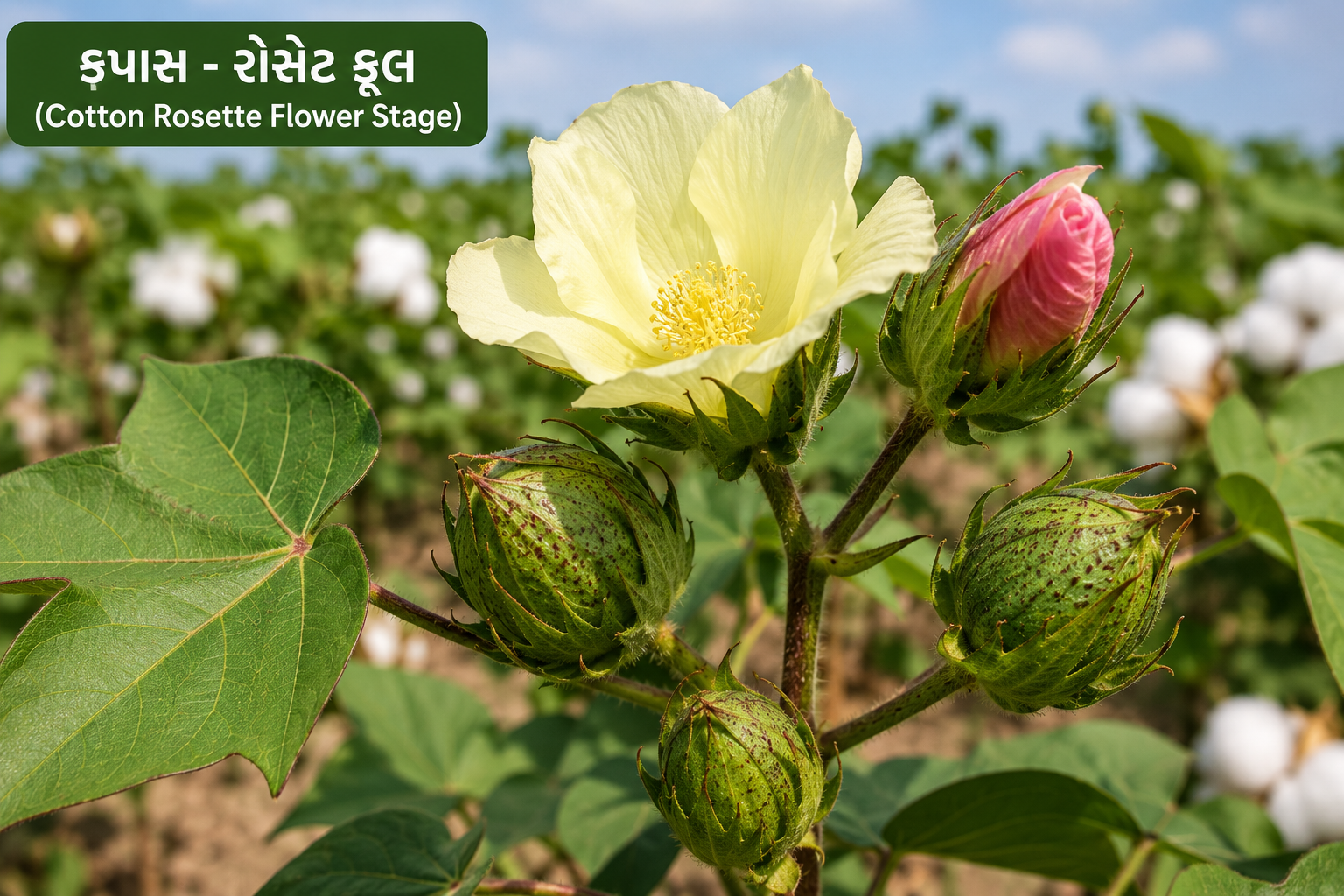
- At Flowering Stage: Observe the bloomed flowers in your field. If some petals remain fused together and twisted like an unopened rose bud (Rosette flower), it is a clear sign of pink bollworm infestation inside.
- At Boll Stage: Inspect young, developing bolls for tiny black spots or entry holes where the young larvae have bored in.
2. Stage-Wise Damage Symptoms & Comparison
Understanding how the pest attacks at different physiological stages of the crop is vital for timely intervention:
| Crop Stage | Damage Symptoms | Severity Level |
|---|---|---|
| Flowering Stage | Larvae feed on the anthers and pollen; flowers turn into rosette shapes and shed prematurely. | Early Stage (10-15%) |
| Young Bolls Stage | Larvae bore into tender bolls, causing them to turn yellow, dry up, and drop from the plant. | Moderate Loss (20-30%) |
| Mature Bolls Stage | Larvae consume developing seeds and lint. Lint turns yellow/stained, and bolls fail to open completely. | Severe Loss (>50%) |
3. Pheromone Traps: Your Most Economical & Effective Weapon
Pheromone traps act as an indispensable tool for monitoring and mass-trapping pink bollworms. The lure placed inside the trap releases a scent identical to the female moth's sex pheromone, attracting and trapping adult male moths, thereby disrupting their mating cycle.
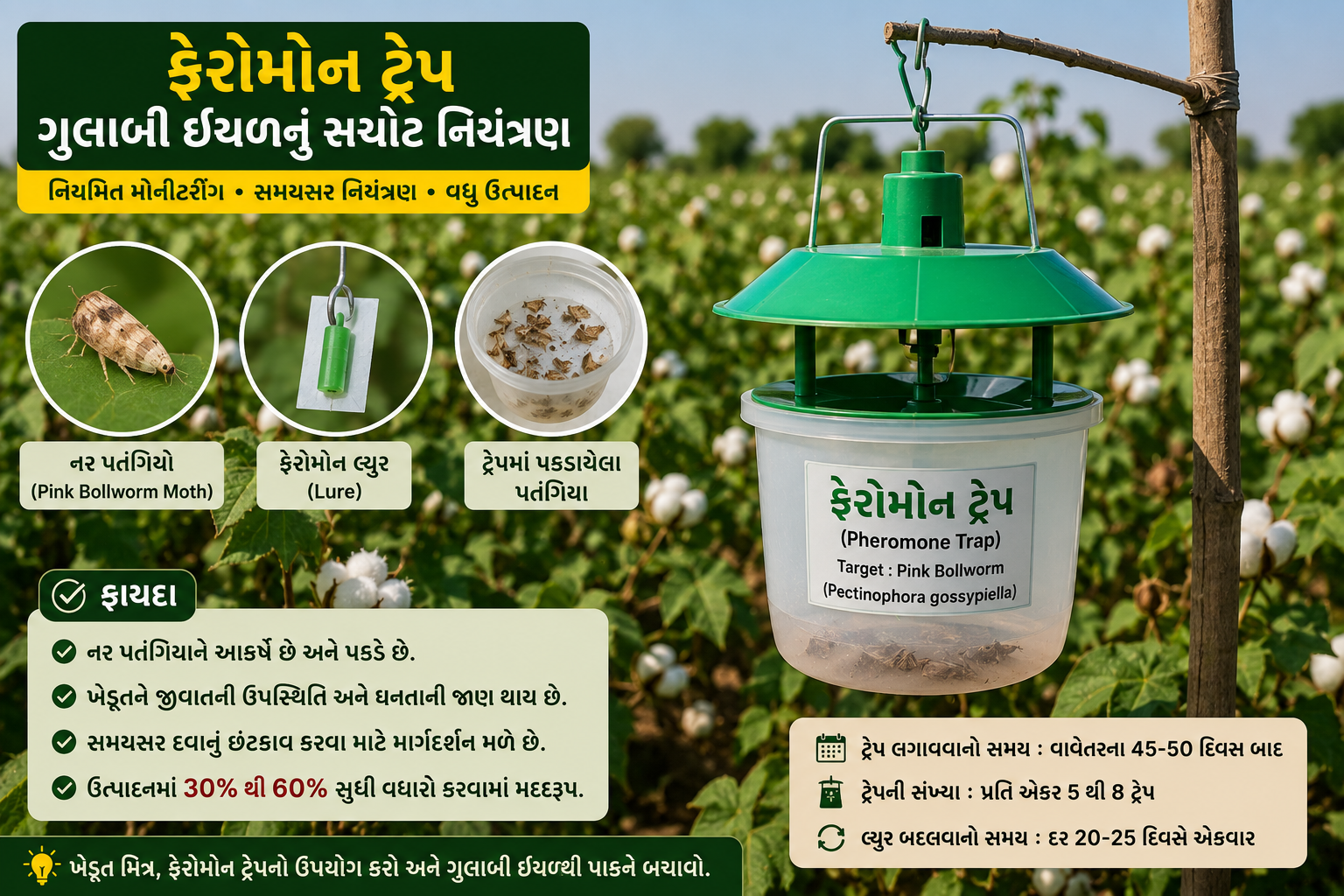
💡 Expert Agronomy Tip:Install 8 to 10 pheromone traps per acre exactly 45 days after sowing. To maintain trapping efficiency, remember to replace the pheromone lure every 25 to 30 days without fail.
4. Neem Oil & Biological Control Methods
Before resorting to expensive chemical pesticides, applying biological control measures at the early growth stage significantly lowers pest control expenditures.
- Neem Oil Spray: At the very onset of flowering, apply a preventive spray of Neem Oil (1500 PPM) at a dose of 40 to 50 ml per 15-liter pump. This acts as an oviposition deterrent, preventing female moths from laying eggs.
- Trichogramma Wasps: Install egg parasitoid cards of Trichogramma wasps at a rate of 60,000 eggs per acre. These beneficial wasps seek out and destroy pink bollworm eggs naturally.
5. Recommended Chemical Insecticide Schedule
When pheromone traps continuously capture 8 to 10 moths daily for 3 consecutive days, or when more than 10% of flowers in the field display rosette symptoms, initiate the following chemical spray schedule:
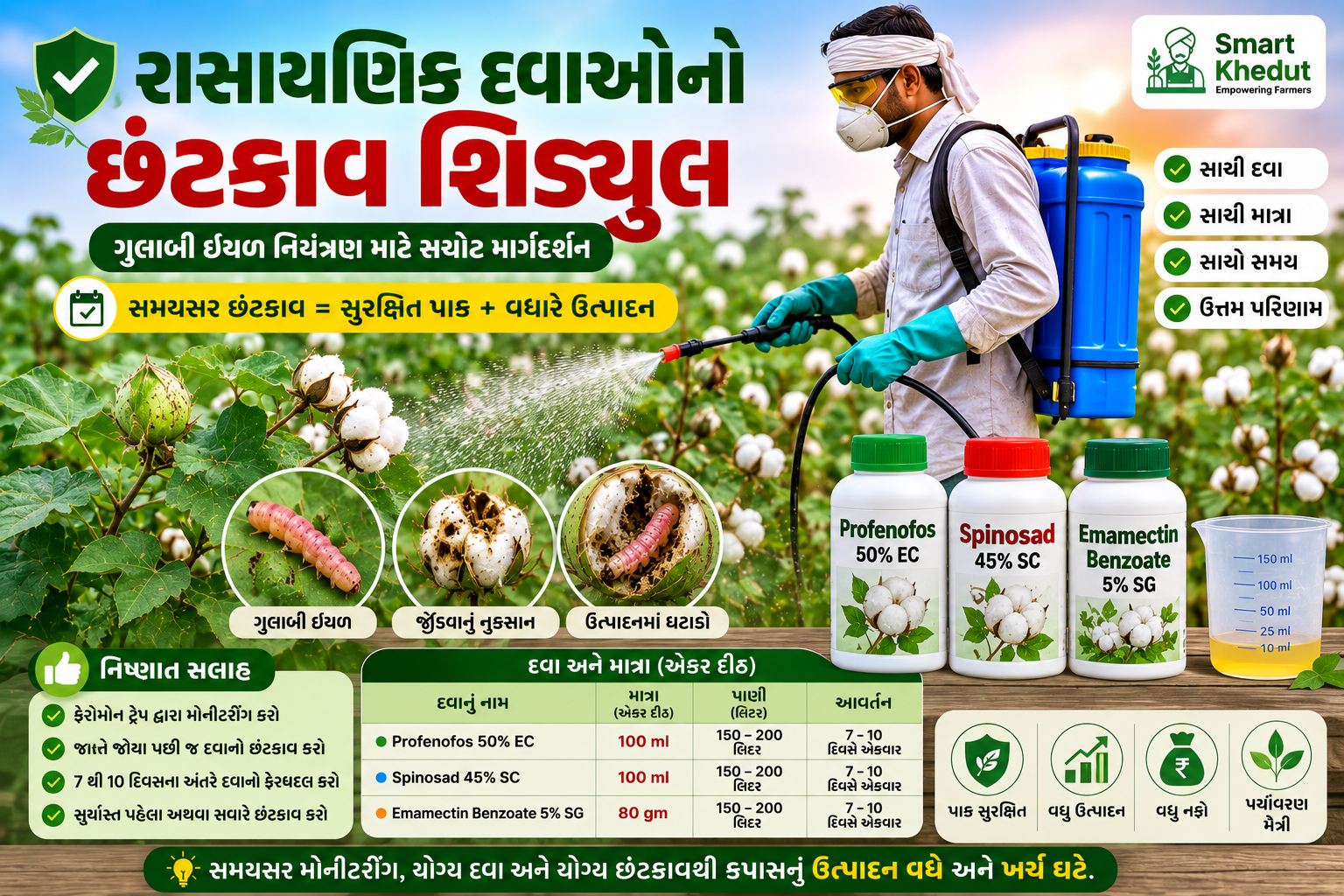
- First Spray (At 60-70 Days): Profenofos 50% EC at 30 ml OR Quinalphos 25% EC at 30 ml per 15 liters of water.
- Second Spray (At 90-100 Days): Emamectin Benzoate 5% SG at 10 grams OR Thiodicarb 75% WP at 25 grams per 15 liters of water.
- Third Spray (In severe outbreaks): Spinosad 45% SC at 5 ml per 15 liters of water. (Note: As this is a premium and costly molecule, use it only when infestation exceeds the economic threshold level).
6. Preventive Agronomic Measures for Farmers
Breaking the life cycle of the pink bollworm requires combining chemical control with strict cultural and agronomic practices:
- Crop Residue Management: After cotton harvesting, immediately collect and burn left-over cotton stalks. Stacking dried cotton stalks on farm boundaries allows dormant larvae (diapause) to survive until the next season.
- Deep Summer Ploughing: Conduct deep summer ploughing to expose pupae hiding deep in the soil to scorching sunlight and predatory birds.
- Trap Cropping: Grow 2-3 border rows of Okra (Bhindi) or Maize around the cotton field. These trap crops attract pests first, safeguarding the main cotton crop.
7. Estimated Economic Impact & Losses

Uncontrolled pink bollworm infestations drastically reduce oil content in cotton seeds and turn the white lint stained and yellow. In agricultural produce markets, such damaged cotton fetches ₹200 to ₹300 less per maund (20 kg). Factoring in a direct yield loss of 3 to 4 quintals per acre, a farmer can easily face a heavy financial loss ranging from ₹15,000 to ₹20,000 per acre.
❓ 8. Frequently Asked Questions (Pink Bollworm FAQs)
1. When does the pink bollworm attack start in cotton?
The infestation initiates as soon as the cotton crop enters the bud and flowering stage, which typically occurs around 45 to 50 days after sowing.
2. What is a 'Rosette Flower' in cotton?
When a pink bollworm larva bores into a developing flower bud, the petals fail to open normally and remain fused together, resembling an unopened rose bud. This diagnostic symptom is called a Rosette Flower.
3. How many pheromone traps should be installed per acre?
Agricultural experts recommend installing 8 to 10 pheromone traps per acre for effective monitoring and trapping.
4. How often should the lure in a pheromone trap be replaced?
To maintain optimal trapping efficiency, the pheromone lure inside the trap must be replaced every 25 to 30 days.
5. When is the ideal time to spray Neem Oil?
Neem oil should be sprayed as a preventive measure right at the initiation of the flowering stage, before the actual pest outbreak occurs.
6. Which chemical insecticides are most effective against pink bollworm?
Profenofos 50% EC, Quinalphos 25% EC, Emamectin Benzoate 5% SG, and Spinosad 45% SC are highly effective chemical formulations against pink bollworm.
7. Can insecticidal sprays eliminate 100% of the pink bollworms?
No. Once the caterpillar enters inside the sealed cotton boll, contact or systemic insecticides cannot reach it. Therefore, sprays must be applied proactively before larvae bore into the squares or small bolls.
8. What is the recommended dosage of Spinosad 45% SC?
The recommended dosage for Spinosad 45% SC is 5 to 7 ml mixed in a standard 15-liter knapsack sprayer.
9. What should be done with cotton stalks after the harvest?
Since pink bollworm larvae survive in a dormant state inside left-over cotton stalks, farmers should use a rotavator to incorporate them into the soil or burn the stalks immediately after harvesting.
10. Which plants serve as the best trap crops for cotton?
Planting 2 to 3 border rows of Okra (Lady's finger) or Maize around the main cotton field acts as an excellent trap crop, diverting pests away from cotton plants.
📚 References & Sources
- Central Institute for Cotton Research (CICR), Nagpur
- Navsari Agricultural University (NAU) Cotton Pest Guidelines
- Farmer's Portal (i-Khedut), Government of Gujarat
- Field Consultations with Agronomists in Saurashtra & North Gujarat