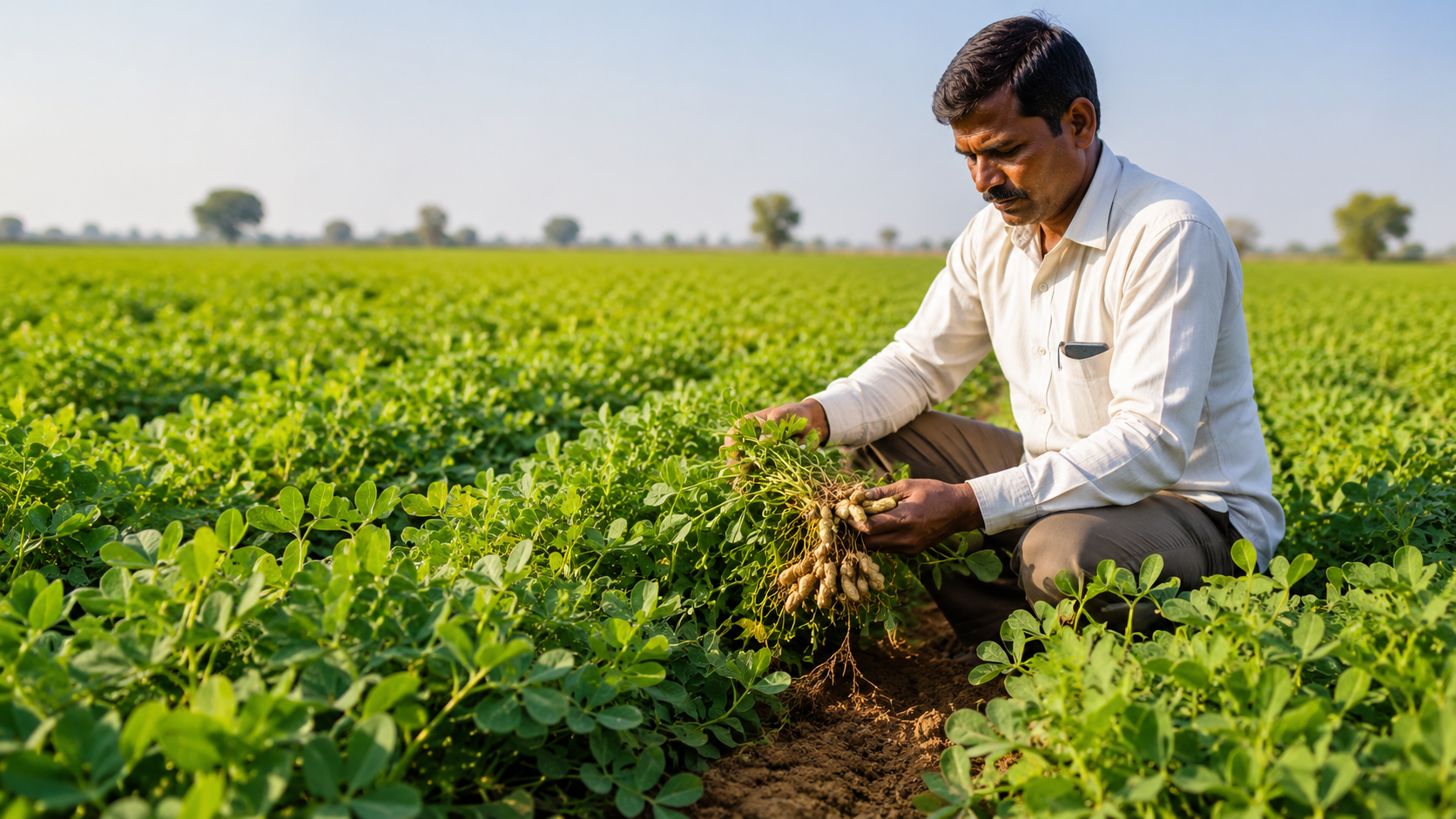
In Gujarat, particularly across the Saurashtra region, Groundnut (Peanut) is a vital kharif cash crop that serves as an economic lifeline for thousands of farmers. However, heavy monsoon rains, continuous soil moisture, and overcast skies create ideal breeding conditions for devastating Fungal Diseases. Without timely intervention, these infections can wipe out 30% to 50% of the anticipated yield.
Fellow farmers, Tikka disease (Leaf spot), White Fungus or Stem Rot (Sclerotium rolfsii), and Collar Rot are the primary biological threats to groundnut productivity. In this comprehensive guide, we explore early diagnosis, yield loss estimation, biological remedies like Trichoderma, and an optimized chemical fungicide spray schedule to keep your crop healthy and profitable.
📋 Table of Contents
- 1. Seed Treatment: The Foundation of Protection
- 2. Identification of Fungal Diseases (Table)
- 3. Tikka Disease (Leaf Spot) Management
- 4. Stem Rot & White Fungus Control
- 5. Biological Control Using Trichoderma
- 6. Ideal Fungicide Spray Schedule
- 7. Economics: Yield Loss vs. Control Costs
- 8. Government Subsidies on Sprayers
- 9. 10 Frequently Asked Questions (FAQ)
1. Seed Treatment: The Foundation of Disease Protection
The majority of fungal pathogens attacking groundnut originate from seed-borne and soil-borne spores. Executing a scientific Seed Treatment prior to sowing effectively eliminates up to 60% of early-stage seedling diseases and guarantees uniform germination.
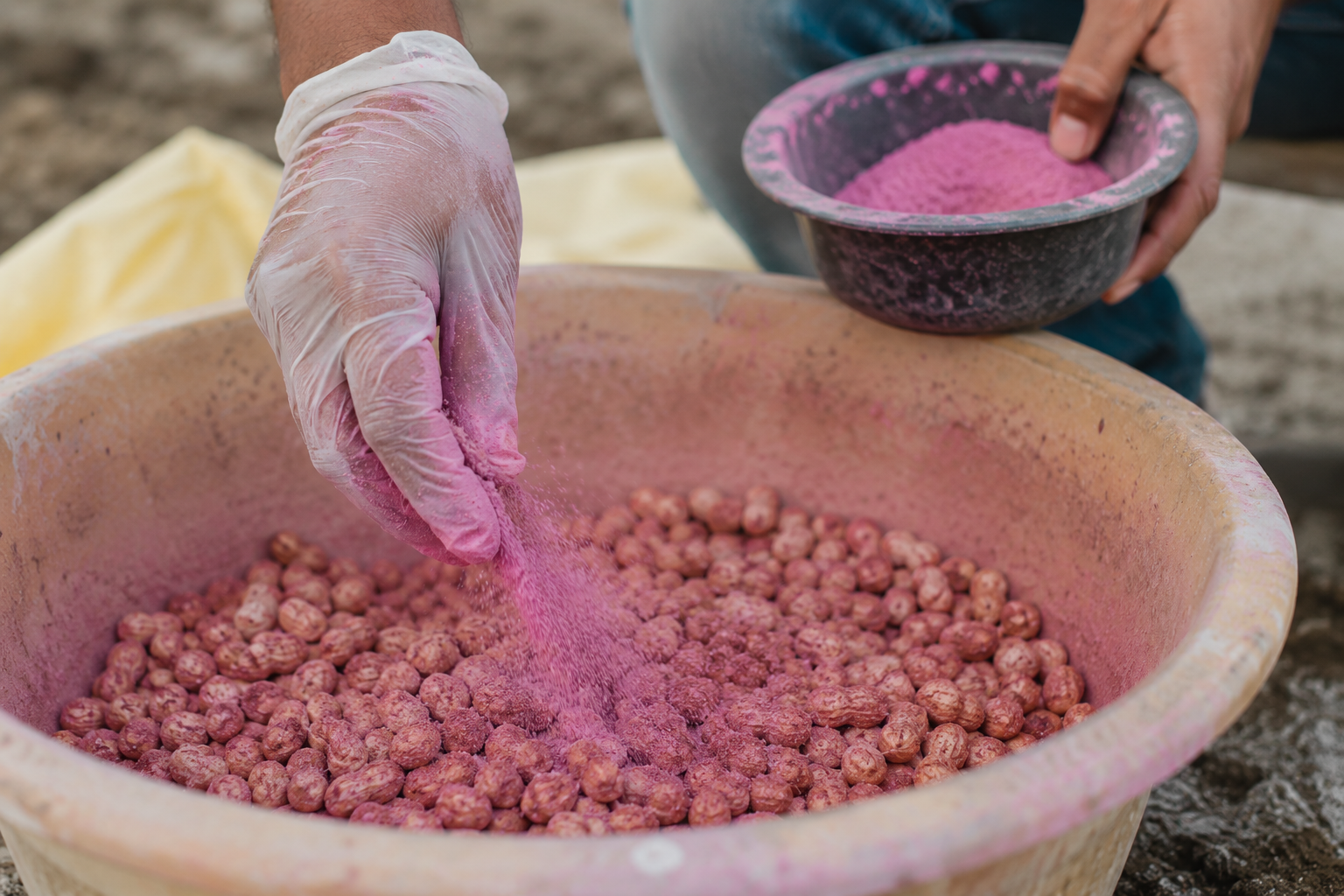
- Chemical Seed Treatment: Treat groundnut seeds with Thiram or Carbendazim at a dosage of 3 grams per kilogram of seed prior to sowing.
- Biological Seed Treatment (Recommended): Coat seeds with Trichoderma viride at a rate of 10 grams per kilogram of seed. This beneficial bio-fungicide aggressively colonizes the rhizosphere and outcompetes soil-borne fungal pathogens.
2. Identification & Severity of Primary Fungal Diseases
Accurate field diagnosis is crucial for selecting the correct fungicide. Refer to the diagnostic table below to distinguish between common groundnut infections:
| Disease Name | Diagnostic Symptoms | Vulnerable Crop Stage |
|---|---|---|
| Tikka Disease (Leaf Spot) | Dark brown or black circular spots appear on the foliage, surrounded by a distinct bright yellow halo. Caused by Cercospora fungi. | 30 to 40 days post-sowing |
| Stem Rot (White Fungus) | White, cottony fungal mycelium grows around the base of the stem at the soil line, accompanied by mustard-seed-like sclerotia bodies. | Flowering and pegging stage |
| Collar Rot (Aspergillus) | Emerging seedlings turn black and rot at the collar region (soil line), causing sudden toppling and seedling death. | 10 to 15 days post-emergence |
3. Tikka Disease (Leaf Spot) Management
Tikka is the most widespread foliar disease of groundnut. Severe spotting destroys photosynthetic leaf area, triggers premature defoliation, and inhibits pod filling underground, leading to shriveled kernels and significant losses.
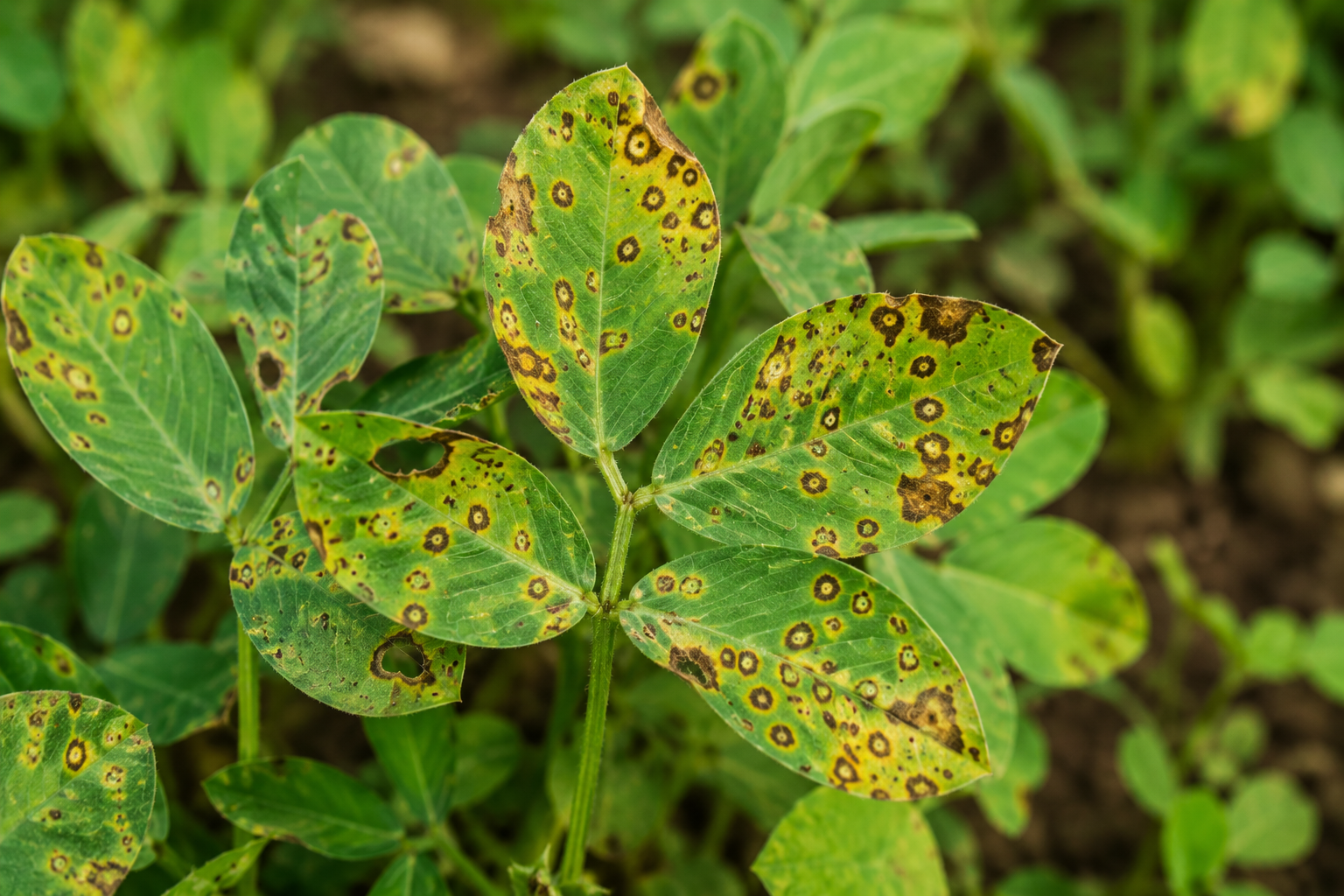
💡 Chemical Control Protocol:At the first sign of leaf spotting, apply a foliar spray of Mancozeb 75% WP at 30 grams per 15-liter sprayer, or Tebuconazole 25.9% EC at 15 to 20 ml per 15 liters of water. Repeat the application 15 days later if humid weather persists.
4. Stem Rot & White Fungus (Sclerotium rolfsii) Control
Stem rot is a primary yield-limiting factor across Saurashtra. The fungus thrives when heavy rains are followed by dry, hot weather. The pathogen attacks the stem at the soil interface, girdling the plant and causing sudden, permanent wilting of the entire foliage.
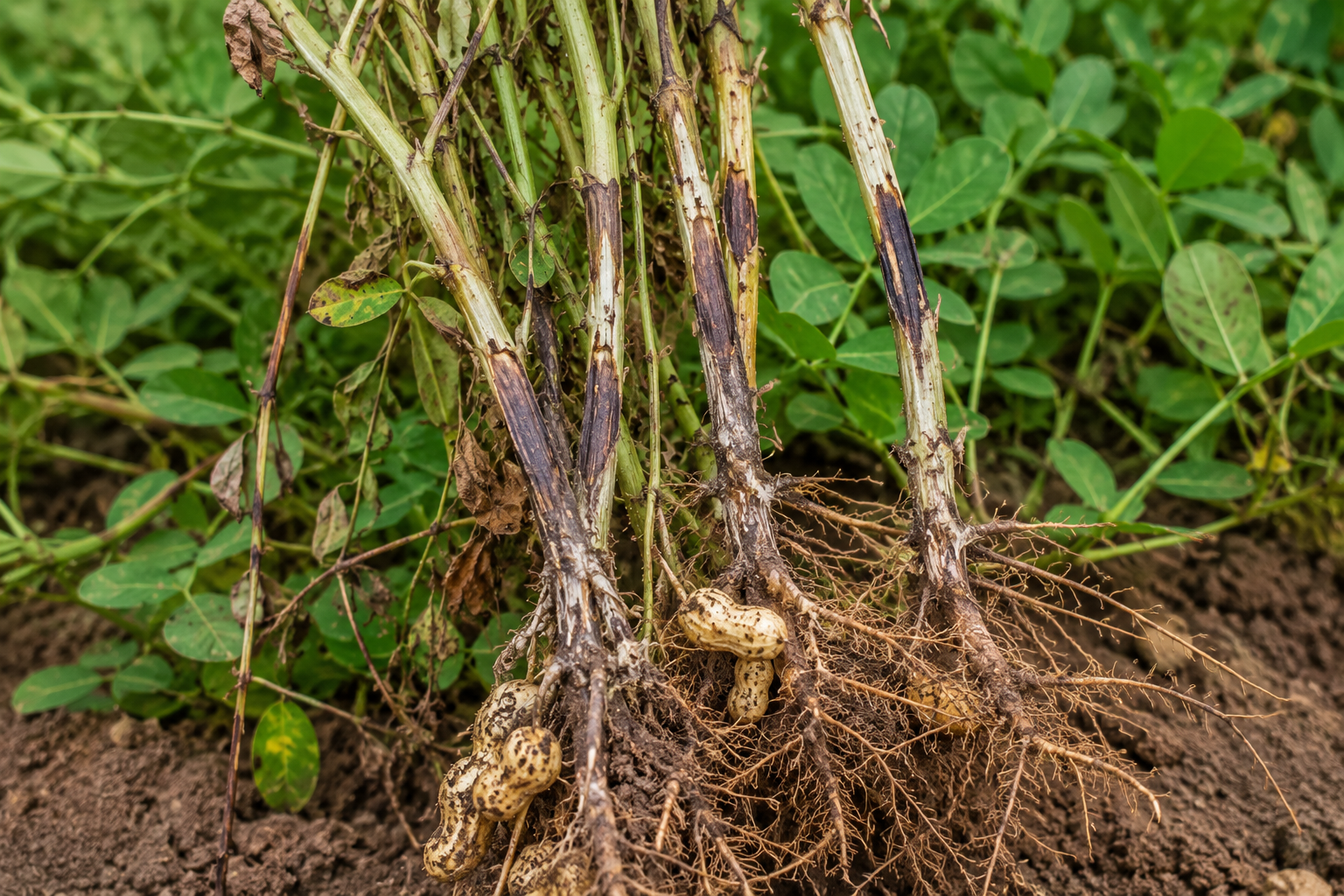
- Cultural Prevention: Practice deep summer ploughing to expose sclerotia to solar heat. Maintain a crop rotation schedule with non-host cereals like maize or pearl millet.
- Chemical Control: Drenching or targeting foliar sprays toward the plant base using Hexaconazole 5% SC at 30 ml per pump, or a combination formulation of Tebuconazole + Sulphur, provides highly effective control against active stem rot infections.
5. Biological Control: Harnessing Trichoderma
Using the beneficial antagonistic fungus Trichoderma (T. viride / T. harzianum) is a highly cost-effective and eco-friendly alternative to chemical fungicides. Trichoderma actively parasitizes and destroys soil-borne pathogens like Sclerotium and Aspergillus.
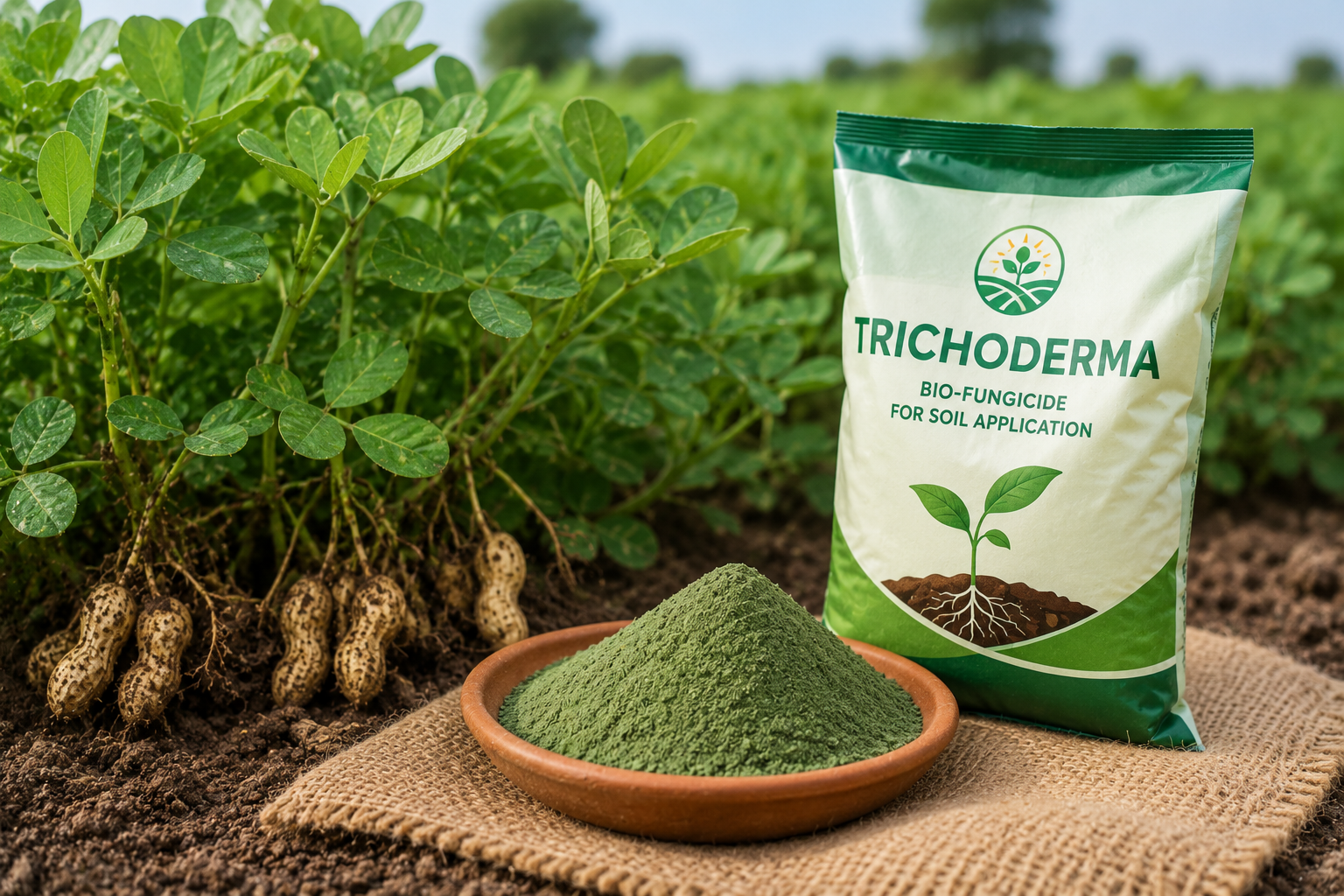
Method of Application: Mix 2 to 2.5 kg of commercial Trichoderma powder into 100 kg of well-decomposed, moist Farmyard Manure (FYM) or castor cake. Keep the mixture under shade covered with jute bags for 7 days to allow fungal multiplication. Broadcast this enriched manure into the furrows during sowing. (Important Note: Do not apply chemical soil fungicides simultaneously with Trichoderma, as chemicals will kill the beneficial microbes).
6. Ideal Fungicide Spray Schedule
Instead of waiting for an epidemic to erupt, adopting a preventative agronomic spray schedule protects the crop during its most vulnerable developmental phases:
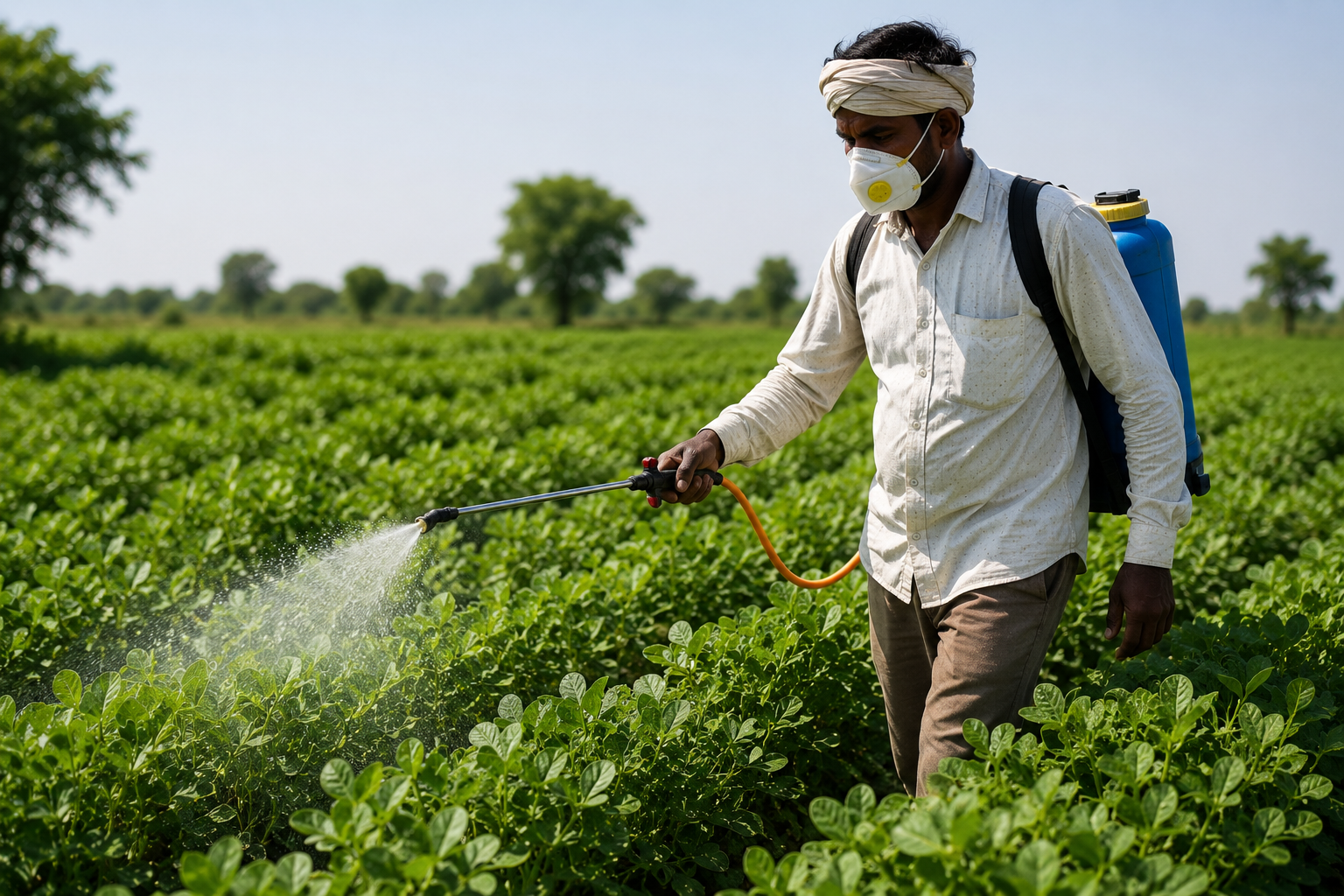
- First Spray (35-40 Days post-sowing): Mancozeb 75% WP (30g) + Carbendazim 50% DF (15g) per 15-liter pump. This preventative application halts initial Tikka spot establishment.
- Second Spray (60-65 Days post-sowing): Tebuconazole 25.9% EC at 15 ml per pump. This critical application coincides with peg initiation and pod formation, shielding the crop from stem rot and late leaf spots.
- Third Spray (80 Days post-sowing - conditional): Propiconazole 25% EC at 15 ml per pump if late-season rains or persistent humidity threaten maturing pods.
7. Economics: Yield Loss vs. Control Costs
Neglecting fungal disease management in groundnut can result in a catastrophic yield reduction of 300 to 500 kg (15 to 25 maunds) per acre. At prevailing market rates, this translates to a direct financial loss of ₹15,000 to ₹20,000 per acre.
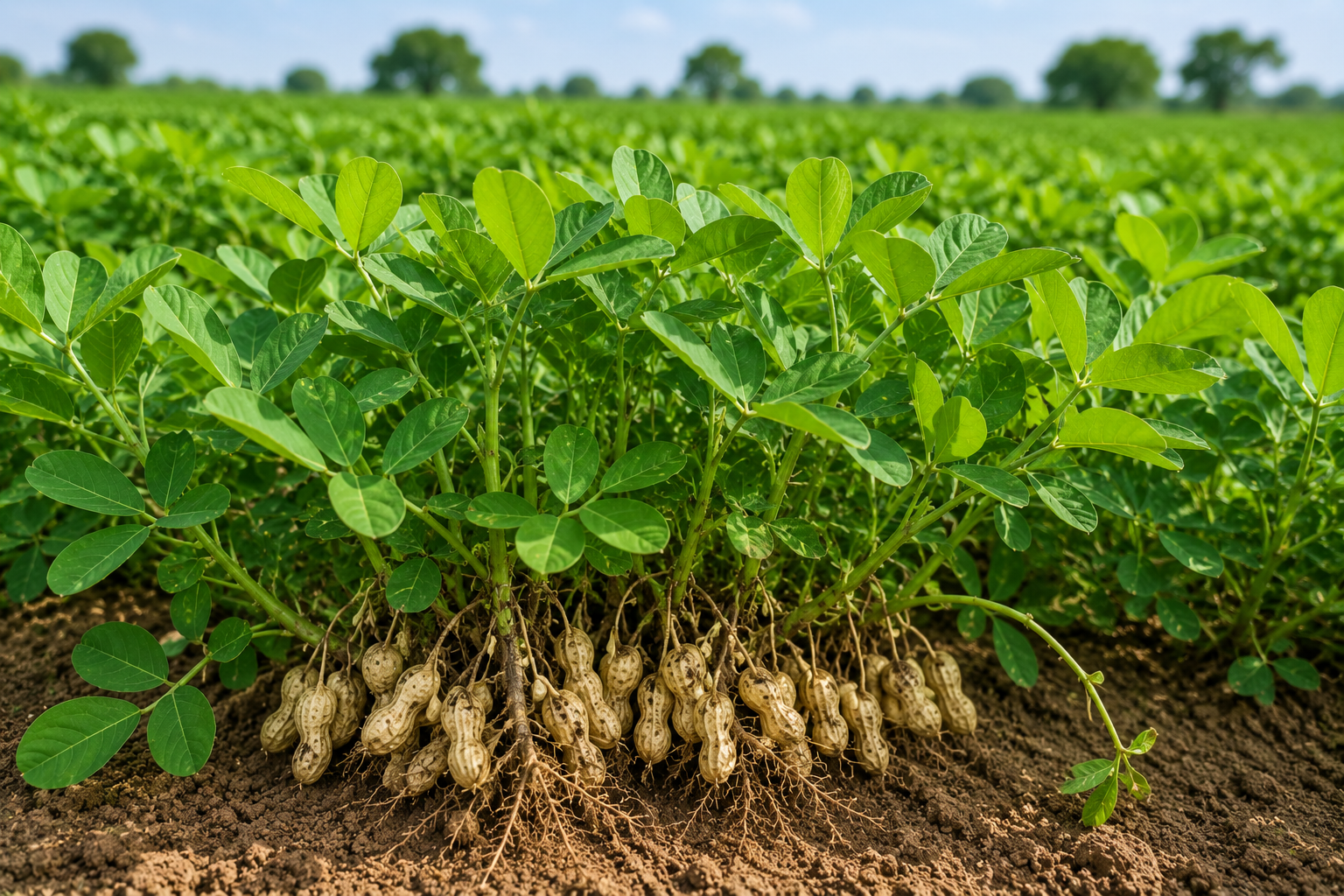
In contrast, executing two preventative fungicide sprays or applying basal Trichoderma incurs a nominal total expenditure of only ₹800 to ₹1200 per acre. Investing in proactive crop protection yields an extraordinary return on investment by preserving harvest quality and volume.
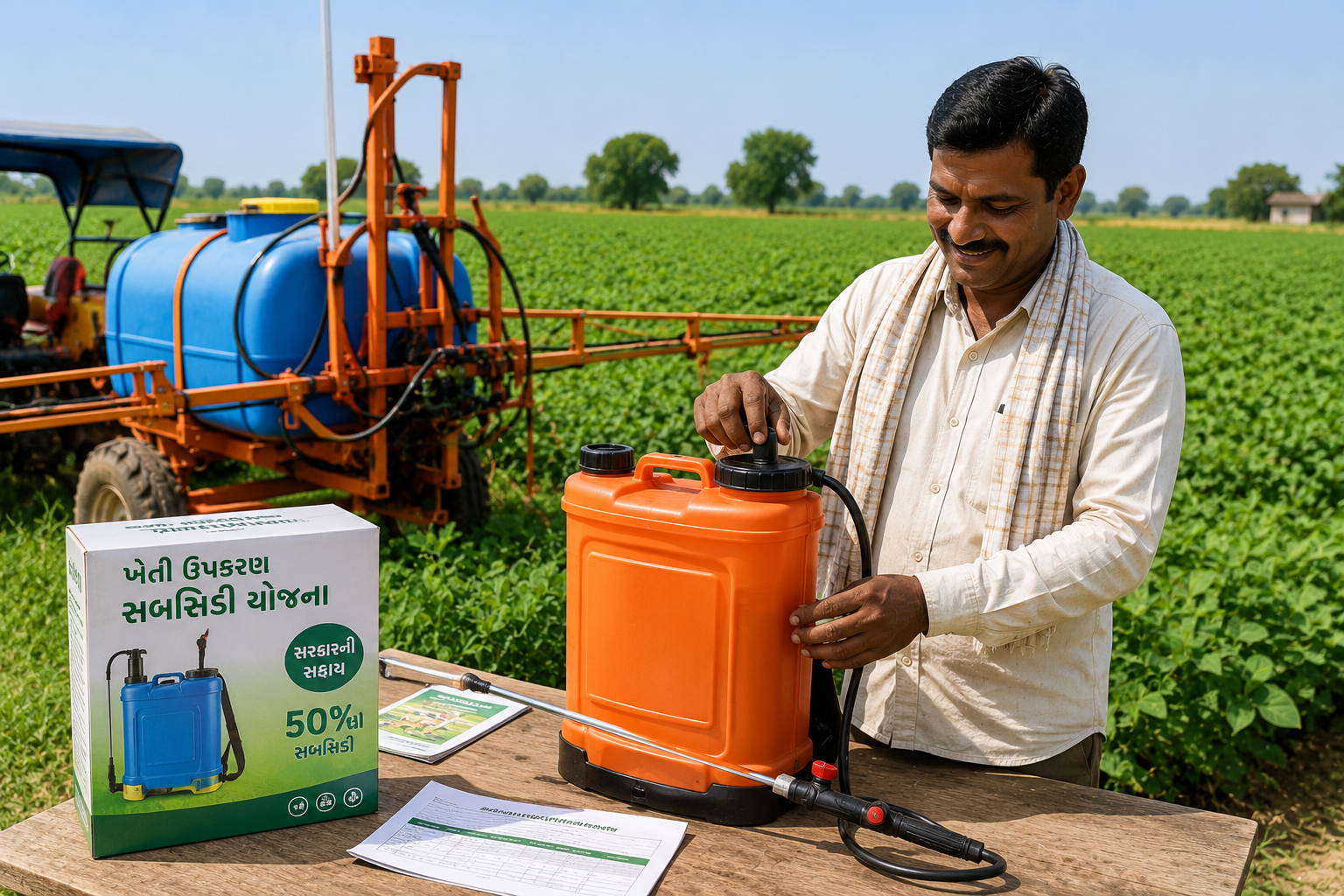
8. Government Subsidies on Plant Protection Equipment
To support farmers in timely pest and disease management, the Government of Gujarat provides financial assistance for purchasing agricultural sprayers through the official i-Khedut Portal:
- Battery-Operated Knapsack Sprayers: Subsidy up to 50% of the cost or ₹1500 (whichever is lower).
- Engine-Operated Power Sprayers: Financial assistance up to 50% of the cost or ₹3000.
- To avail these benefits, farmers must submit an online application on the i-Khedut portal during the designated kharif registration window.
❓ 9. Frequently Asked Questions (Groundnut Disease FAQs)
1. Which is the best seed treatment chemical for groundnut?
For chemical treatment, Thiram or Carbendazim at 3g per kg of seed is highly effective. For biological protection, seed dressing with Trichoderma viride at 10g per kg is considered the gold standard.
2. What are the earliest symptoms of Tikka disease?
The disease appears as small, circular dark brown or black spots on the leaves, surrounded by a distinct bright yellow halo. Severe infection leads to rapid leaf yellowing and shedding.
3. Under what weather conditions does Stem Rot trigger rapidly?
Stem rot (White fungus) spreads aggressively when continuous soil moisture from heavy rains is immediately followed by a dry, hot weather spell that elevates soil temperature.
4. Which fungicide is most effective against Stem Rot (White Fungus)?
Targeted basal sprays or drenching with Tebuconazole 25.9% EC (15 ml/pump) or Hexaconazole 5% SC (30 ml/pump) provide excellent curative control against stem rot.
5. Can I mix Trichoderma with chemical fungicides?
No. Trichoderma is a beneficial living fungus. Mixing it with chemical fungicides or applying them simultaneously in the soil will kill the Trichoderma spores, rendering the treatment useless.
6. When should the first preventative fungicide spray be applied?
Even if visual symptoms are absent, applying a preventative spray of Mancozeb around 35 to 40 days after sowing effectively protects the canopy from initial fungal spore establishment.
7. What causes Collar Rot in groundnut seedlings?
Collar rot is caused by soil-borne Aspergillus niger fungus. It attacks seedlings within 10 to 15 days of emergence, causing the stem base (collar) to rot and turn black, resulting in seedling death. Proper seed treatment is the only effective defense.
8. Why is an agricultural spreader/sticker important during monsoon sprays?
During rainy periods, adding a silicon-based sticker (spreader) ensures that the fungicide solution spreads evenly over the waxy groundnut leaf surface and prevents the chemical from being washed away by sudden rain showers.
9. How much yield loss can Tikka disease cause if left untreated?
Uncontrolled Tikka disease can cause severe premature defoliation, leading to poor pod filling, lightweight nuts, and an overall yield loss ranging from 20% to over 50%.
10. What are the long-term advantages of using bio-fungicides like Trichoderma?
Bio-fungicides like Trichoderma permanently improve soil biodiversity, leave no toxic residues in the soil or harvested nuts, prevent pathogen resistance, and are significantly cheaper than synthetic chemicals.
📚 References & Sources
- Directorate of Groundnut Research (ICAR-DGR), Junagadh
- Junagadh Agricultural University (JAU) Crop Guidelines
- Farmer's Portal (i-Khedut), Government of Gujarat
- Field Consultations with Agronomists in Saurashtra