
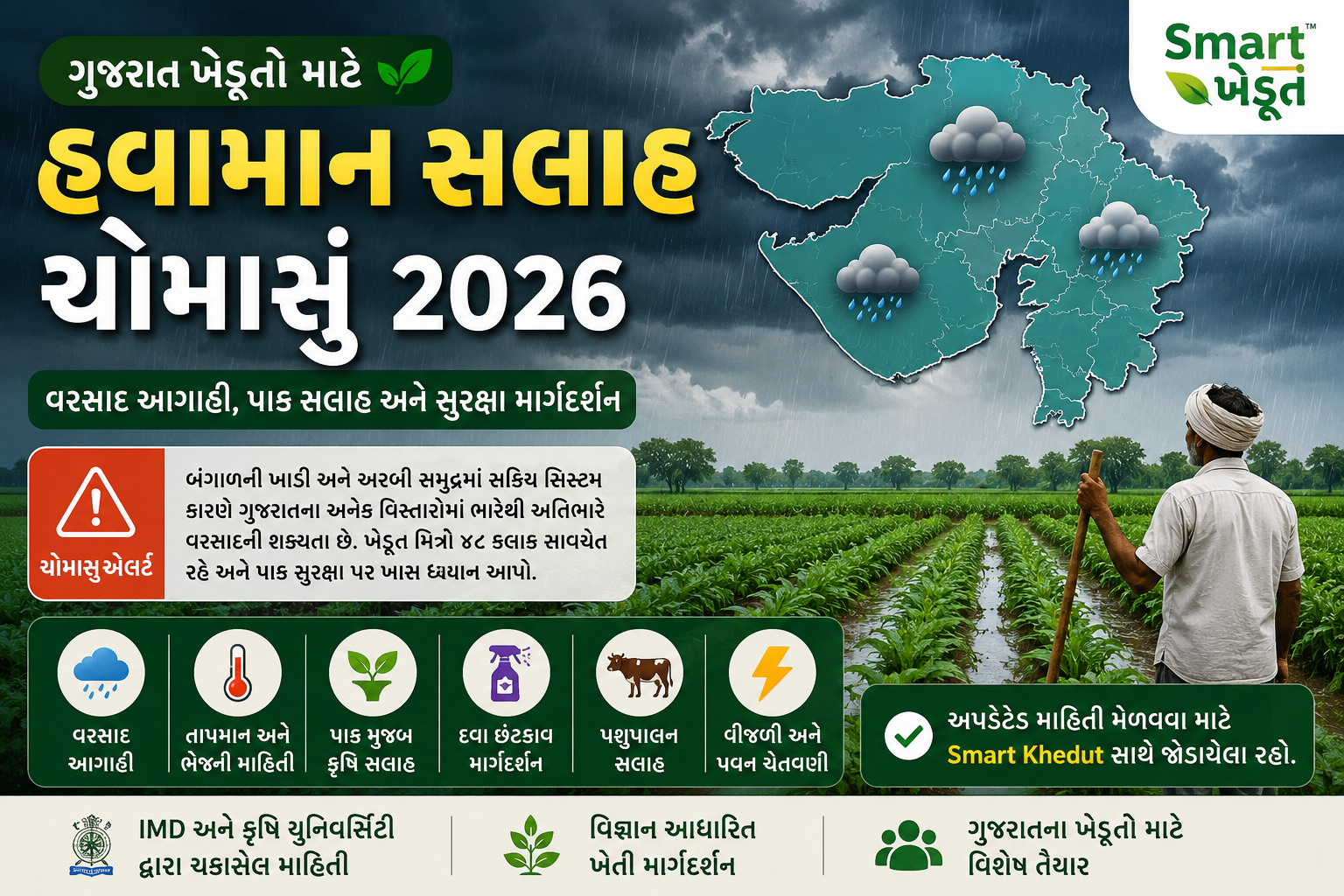
Due to active weather systems over the Bay of Bengal and the Arabian Sea, heavy to very heavy rainfall is predicted across various districts of Gujarat. Farmers are strongly advised to remain vigilant over the next 48 hours for crop protection and drainage management.
For farmers across Gujarat, the post-sowing period is highly critical for crop establishment and management. According to the latest bulletins from the India Meteorological Department (IMD) and State Agricultural Universities, the Southwest Monsoon is fully active over the region. Rising atmospheric humidity combined with shifts in wind speed can elevate the threat of sucking pests and fungal epidemics. This comprehensive Weather Advisory will guide you in safeguarding your standing crops against monsoon-related risks.
🌧️ Rainfall & Atmospheric Conditions
- • Rain Probability: 75% - 90% (Light to heavy downpours)
- • Cloud Cover: Overcast to completely overcast skies
- • Lightning Alert: High probability of thunderstorms during afternoon/evening
🌡️ Temperature, Humidity & Wind
- • Temperature: Maximum 32°C | Minimum 25°C
- • Humidity: 85% to 95% (Favorable for fungal pathogen buildup)
- • Wind Speed: 15 to 25 km/hr (Blowing from South-West/West)
🗺️ District-wise Rainfall Alerts
📋 Table of Contents
1. Cotton Crop Advisory
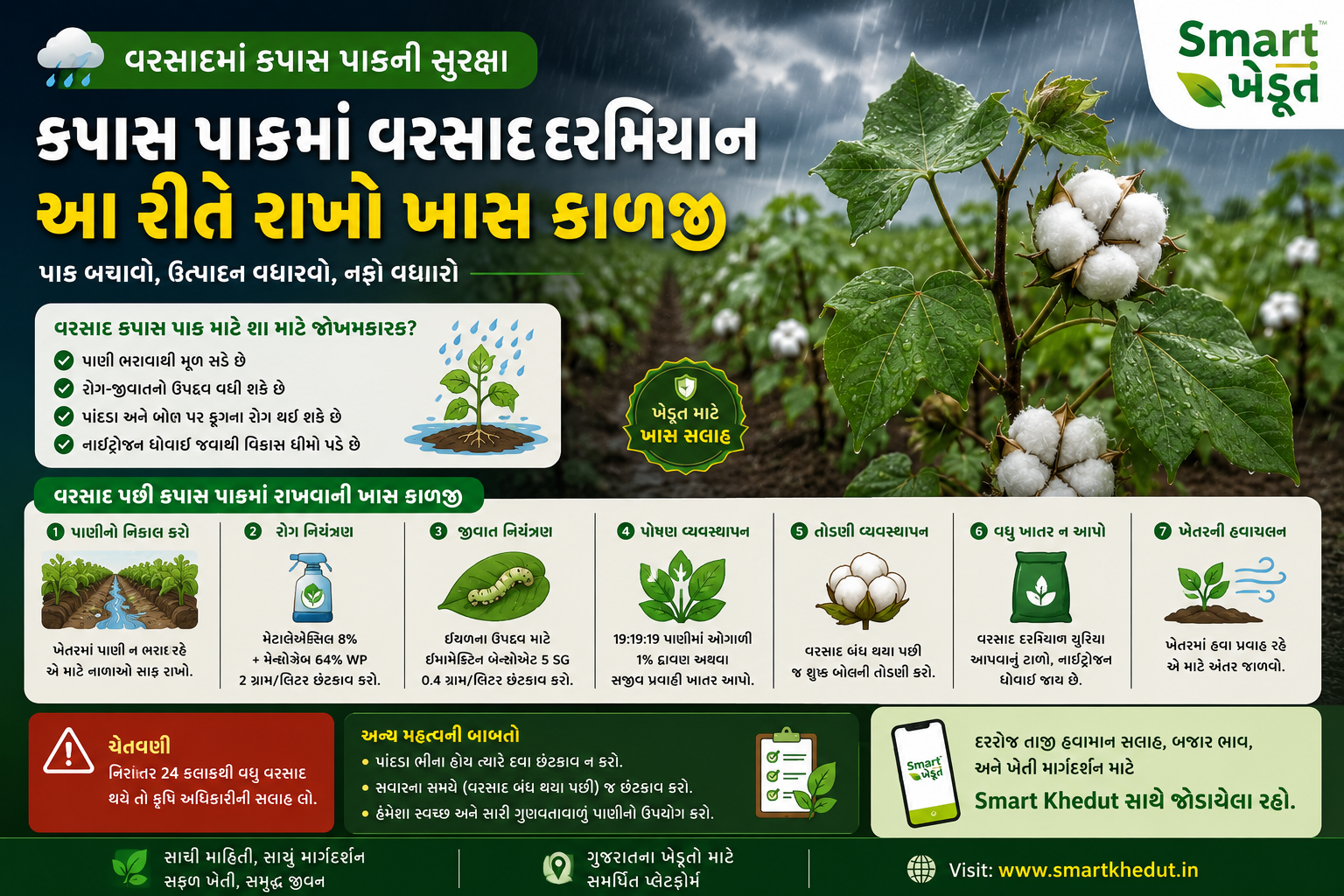
Excessive moisture and waterlogging can be detrimental to young cotton crops. Persistent overcast weather accompanied by high relative humidity favors outbreaks of sucking pests (aphids, jassids, thrips) alongside foliar fungal infections.
👨🌾 Agricultural Expert Recommendation
"Never apply any chemical spray in your cotton field while it is raining. Wait until precipitation stops and the soil surface dries sufficiently (Varap condition). Always add a silicon-based agricultural sticker to your recommended insecticide or fungicide solution."
2. Groundnut Crop Advisory
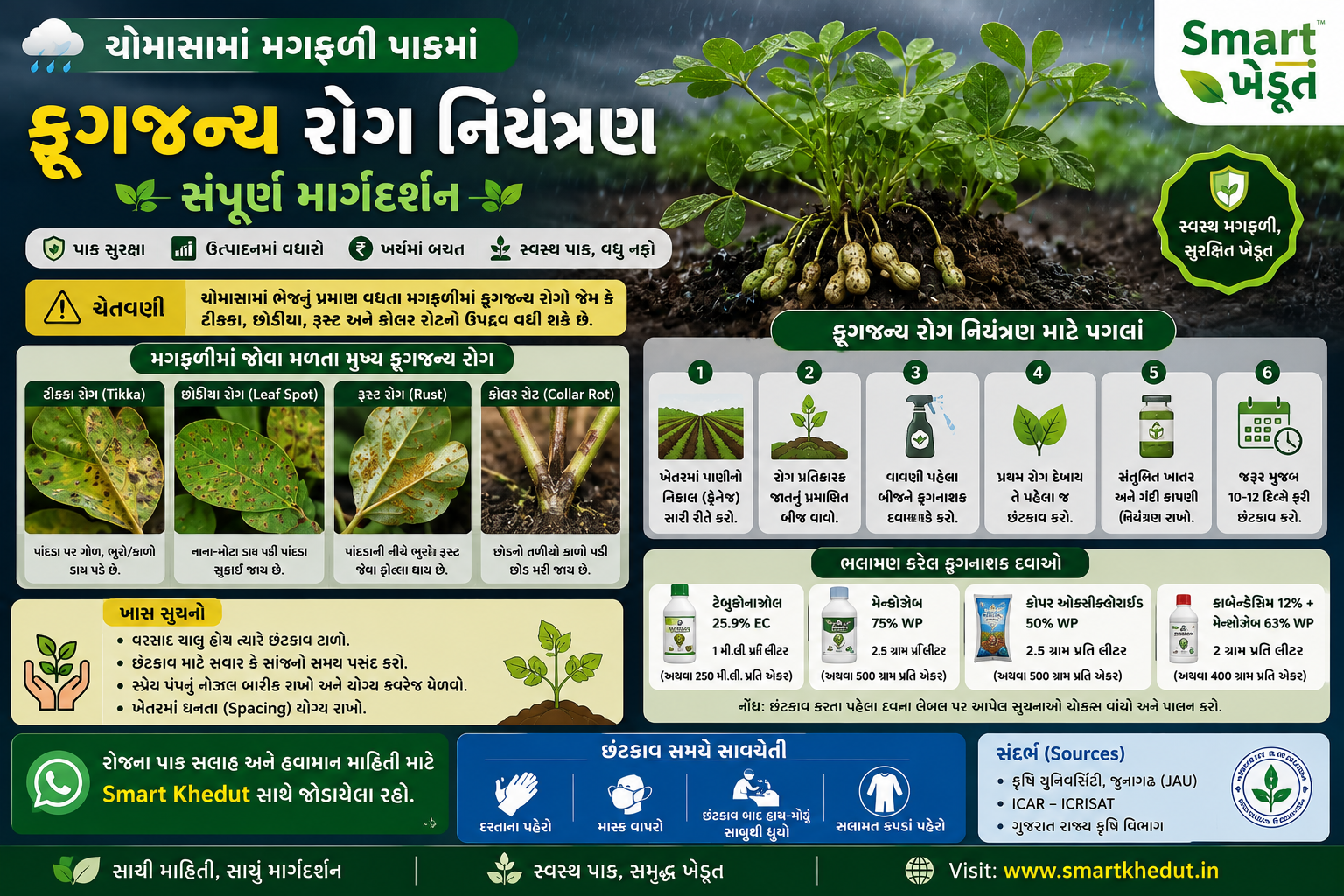
In groundnut cultivation, continuous high soil moisture levels drastically increase the susceptibility of seedlings to Collar Rot (Sclerotium rolfsii) and root rot fungal pathogens.
⚠️ Special Alert for Groundnut & Cotton Farmers!
- Avoid carrying out intercultural operations (weeding/hoeing) while soil is wet, as root mechanical damage increases fungal infection risk.
- Do not apply urea or basal chemical fertilizers when heavy rainfall is forecast, as nutrients will leach out or wash away with runoff water.
- For crops showing yellowing due to waterlogging, apply a foliar spray of 19-19-19 or 20-20-20 water-soluble fertilizer once sunny weather resumes.
3. Maize, Bajra, Paddy & Vegetables (Other Crops Advisory)
Implement the following weather-based preventative measures across other major kharif crops and vegetable fields:
🌽 Maize & Bajra (Pearl Millet)
Monitor maize fields for Fall Armyworm infestations; if observed, spray Emamectin Benzoate once weather clears. In bajra fields, perform earthing-up around plant bases to prevent lodging during high-speed monsoon winds.
🌾 Paddy & Soybean
If paddy nursery seedlings are ready, complete transplanting operations taking advantage of rainfall or existing irrigation. In soybean, control foliar leaf-eating caterpillars by applying Chlorantraniliprole.
🍅 Vegetables & Horticultural Crops
Train cucurbitaceous vine vegetables (bottle gourd, bitter gourd, ridge gourd) onto overhead trellises (mandaps) to prevent fruit rotting from direct soil moisture contact. Ensure stagnant water is cleared from around fruit tree basins.
4. Spraying & Fertilizer Guidelines (Key Recommendations)
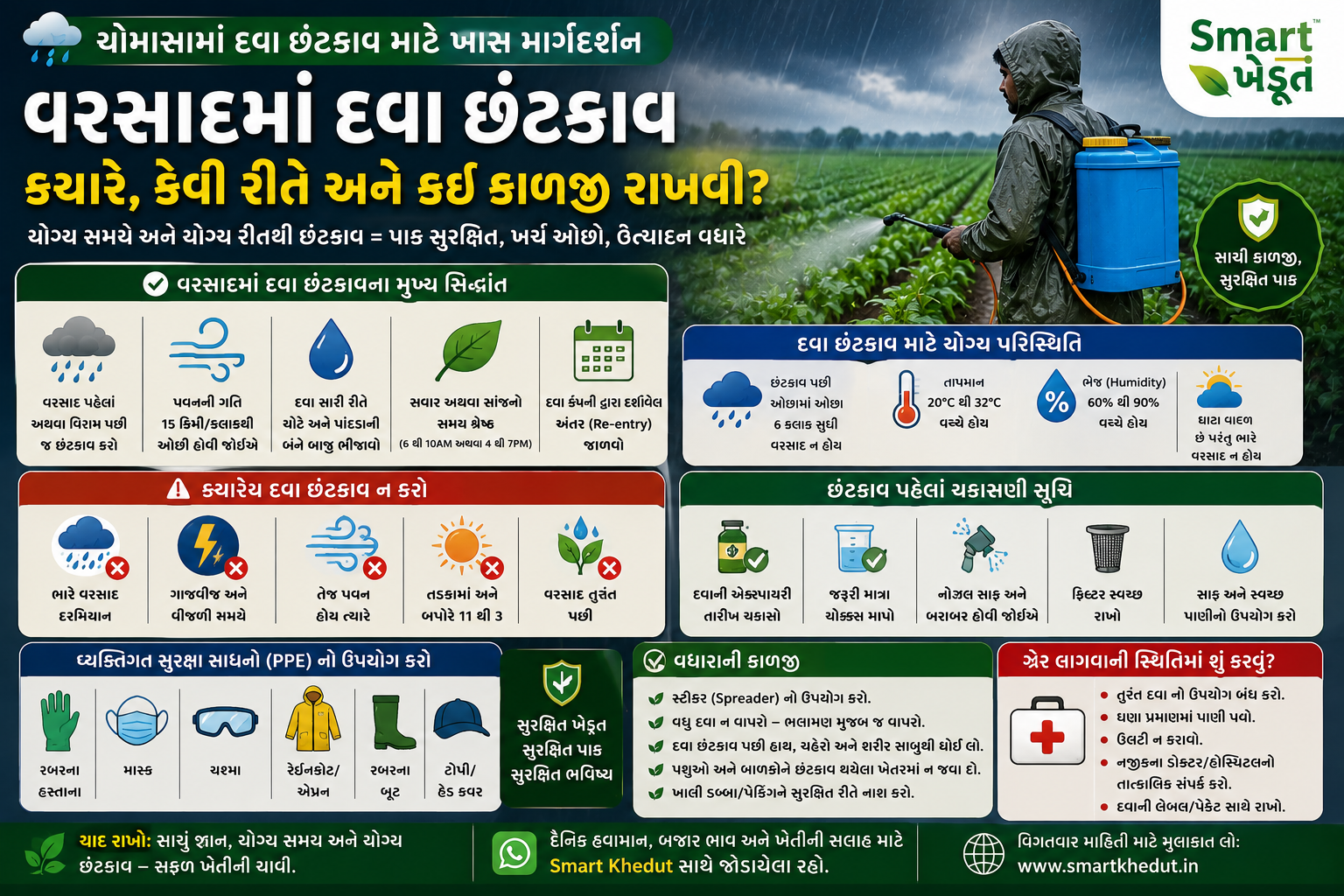
Strictly adhere to these operational guidelines when executing agricultural activities during the monsoon season:
| Agricultural Task | Meteorological Recommendation |
|---|---|
| Foliar Spraying | Postpone pesticide or foliar fertilizer spraying if rainfall is predicted within the next 3 to 4 days. If spraying is urgent, mandatory use of an agricultural sticker is required. |
| Irrigation Management | With adequate soil moisture levels present and further rains forecast, completely suspend all irrigation operations across agricultural fields. |
| Harvesting Operations | Immediately harvest mature crops or fodder grass and transfer produce to elevated covered godowns or protect securely under waterproof tarpaulins. |
| Fertilizer Application | Avoid broadcasting top-dressing fertilizers (Urea, DAP, Potash) prior to expected heavy rainfall to prevent financial loss from leaching and surface runoff. |
5. Livestock Care During Monsoon (Livestock Advisory)
Farmers practicing integrated livestock rearing must maintain extra vigilance regarding animal health and shelter hygiene during rainy periods:
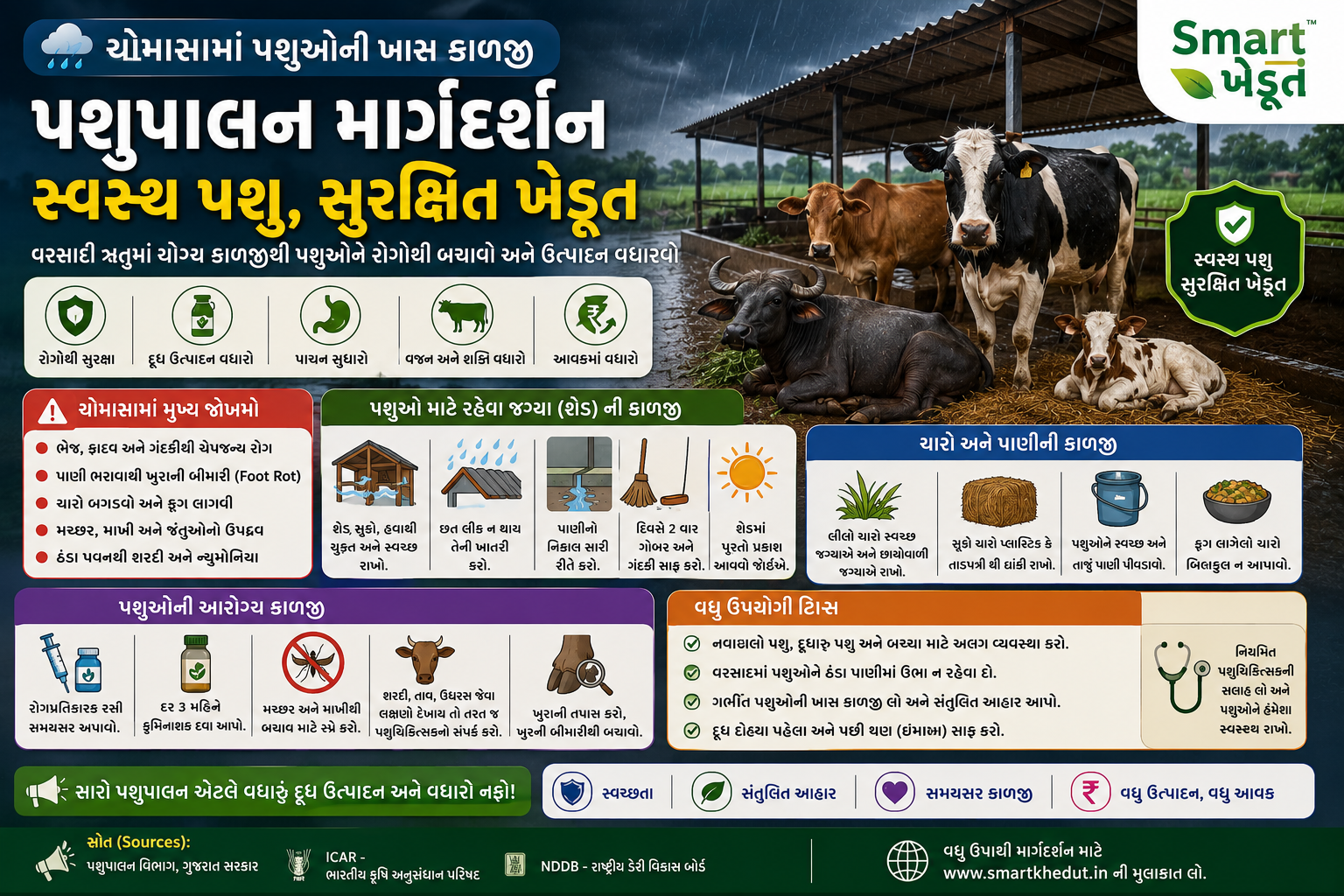
- House animals inside well-ventilated, elevated sheds with leak-proof roofing. Ensure floors remain dry and free from accumulated muck or dung slurries.
- During active thunder and lightning storms, never tie livestock in open fields or under tall trees.
- Complete pre-monsoon prophylactic vaccinations against fatal seasonal diseases including Haemorrhagic Septicemia (HS) and Foot and Mouth Disease (FMD).
- Inspect green and dry fodder thoroughly before feeding; discard any fungal-infested, moldy, or rotting fodder to prevent aflatoxicosis.
🏛️ Farmer Checklist & Safety Protocol
- Keep field drainage channels and boundary trenches clear of debris to ensure rapid water evacuation.
- Store farm machinery, seeds, agrochemicals, and fertilizer bags on elevated platforms protected from ground moisture.
- During thunderstorm activity, immediately halt open-field labor or tractor operations and seek shelter inside permanent concrete buildings.
6. Monsoon Crop Protection & Management (Video Guide)
❓ Frequently Asked Questions (FAQ)
1. When will it rain in Gujarat and what is the upcoming weather forecast?
According to the latest IMD forecast, moderate to heavy rainfall is highly likely across various parts of South Gujarat, Central Gujarat, and Saurashtra over the next 4 to 5 days.
2. What should be done in cotton fields after rainfall?
Once rainfall stops and the soil achieves workable moisture (Varap condition), perform light inter-cultivation to aerate the soil and drench recommended fungicides around root zones to prevent collar rot.
3. When is the right time to spray agrochemicals?
Only perform foliar spraying when skies are clear and there is no rain prediction for the subsequent 3 to 4 hours. Adding a silicon-based agricultural sticker is strongly recommended.
4. Should fertilizers be broadcast before heavy rain?
No. Applying chemical fertilizers prior to heavy rainfall should be avoided, as nutrients will wash away with surface runoff or leach below the root zone, offering zero crop benefit.
5. What safety precautions should farmers take during lightning storms?
Immediately stop all field work and move inside a concrete building or secure structure. Standing in open fields, operating tractors, or sheltering under tall trees is extremely hazardous.
🛡️ Expert Review & Scientific Sources (E-E-A-T)
Reviewed By
Smart Khedut Agri Expert Team
B.Sc Agriculture / Weather Specialists
Scientific & Govt Sources
- India Meteorological Department (IMD)
- Junagadh Agricultural University (JAU) Bulletin
- Anand Agricultural University (AAU) Advisory
- Department of Agriculture, Govt of Gujarat
🌱 Useful Resources & Guides
Get Daily Weather Advisories on Your Phone!
Join our WhatsApp community today to receive district-wise rainfall forecasts, APMC mandi rates, and timely crop advisories directly on your smartphone.
📱 Join WhatsApp Channel