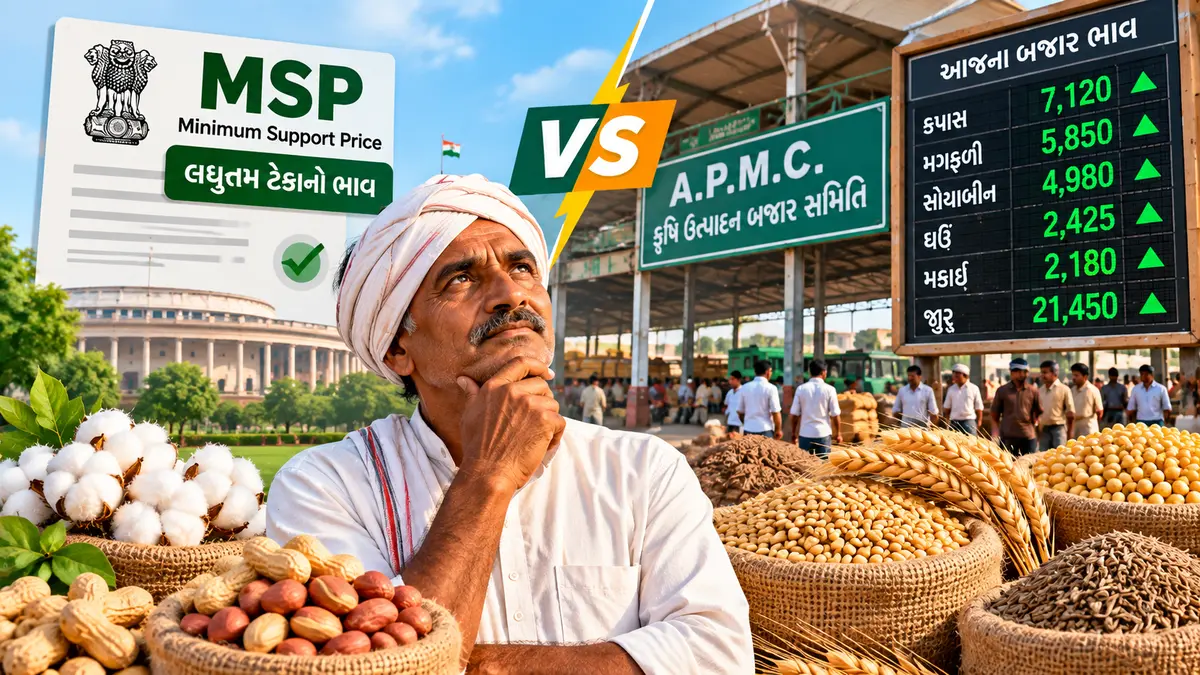
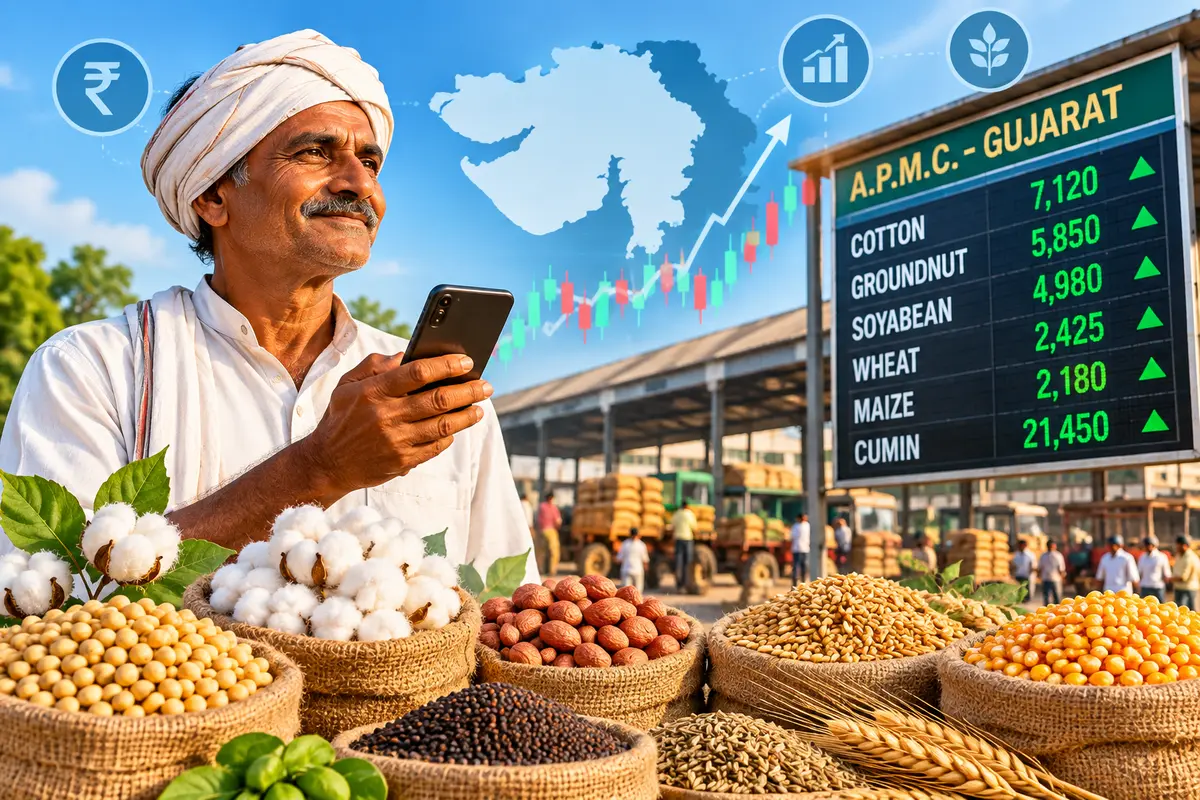
For farmers, producing a good crop is only one part of the business. Selling the crop at a suitable time and at a reasonable price is equally important. A strong fall in market prices can reduce farm income even when production is good.
Understanding Commodity Markets, Futures and Hedging can help farmers understand how agricultural prices move and what types of market risks may exist.
🌾 What is Commodity Trading?
Commodity Trading refers to buying and selling activities connected with commodities or financial contracts based on commodity prices. Agricultural commodities may include cotton, groundnut, castor, cumin, wheat, maize and several other crops.
👨🌾 Why is the Commodity Market important for farmers?
Agricultural prices can change because of demand and supply, production levels, weather conditions, government policies, imports and exports, international prices and market expectations.
For example, higher arrivals during a strong production season can put pressure on prices, while lower production or stronger demand can support prices.
📊 Spot Market vs Futures Market
| Factor | Spot Market | Futures Market |
|---|---|---|
| Transaction | Current market transaction | Contract linked to future pricing |
| Main purpose | Physical buying and selling | Trading and risk management |
| Main risks | Market price risk | Price, margin and leverage risk |
📅 What is a Futures Contract?
A Futures Contract is a standardized financial contract connected to the future price of a commodity. Its value can change as market prices move.
Futures and commodity trading involve financial risk. Leverage and margin requirements can increase losses quickly.
🛡️ What is Hedging?
Hedging is an approach used to reduce or manage exposure to price fluctuations. Large producers, businesses and traders may use market instruments such as futures for risk management.
Hedging does not guarantee profit and the same strategy may not be suitable for every farmer.
🌱 Commodities relevant to Indian agriculture
- Cotton
- Groundnut
- Castor
- Cumin
- Wheat
- Maize
- Chickpeas
- Soybean
💰 APMC Price vs Commodity Price
APMC prices are closely connected with physical crop transactions in local agricultural markets. Commodity market prices can also include prices of futures and other financial contracts.
Therefore, farmers should not assume that a futures price will automatically be the same as the price available in their local APMC market.
📈 Why can crop prices increase?
- Higher demand
- Lower production
- Weather-related supply disruptions
- Higher exports
- Higher international prices
- Government policy changes
- Lower available stocks
📉 Why can crop prices fall?
- Higher market arrivals
- Higher production
- Lower demand
- Higher imports
- Lower exports
- Weak international markets
- High available stocks
⚠️ Major Risks in Commodity Trading
- Price Risk: Prices can move against your expectations.
- Leverage Risk: Leverage can increase both potential gains and losses.
- Margin Risk: Additional margin may be required when the market moves against a position.
- Volatility Risk: Commodity prices can change rapidly.
- Information Risk: Decisions based on incomplete or unreliable information can result in losses.
🚫 Mistakes Farmers and New Traders Should Avoid
- Do not blindly follow WhatsApp or Telegram trading tips.
- Do not trade with borrowed money without understanding the risks.
- Do not treat leverage as easy profit.
- Do not take positions without understanding risk management.
- Do not assume historical prices guarantee future prices.
- Do not put all capital into one commodity.
📱 Check APMC Market Prices
Local APMC prices are important for farmers because they are connected with actual physical crop transactions.
Farmers can check the APMC Market Prices section on Smart Khedut to understand available market information.
🌦️ Weather and Crop Prices
Weather can influence crop production, market arrivals and agricultural supply. Excess rainfall, drought, extreme heat and other weather events can affect market conditions.
Farmers can also check Gujarat Weather information on Smart Khedut.
📚 Why is Market Research Important?
Looking only at today's price may not be enough for a good agricultural marketing decision. Farmers should consider market arrivals, production costs, storage costs, crop quality, demand and supply conditions and their own cash requirements.
More agriculture-related information is available in the Farmer Guides section.
⚠️ Financial Disclaimer
This article is provided for educational and general informational purposes only. Commodity trading, futures and other financial products involve risk and there is no guarantee of profit. Before making financial decisions, consider your financial position and risk capacity and consult an appropriately registered financial professional when necessary.
❓ Frequently Asked Questions
What is Commodity Trading?
Commodity Trading refers to buying and selling activities connected with commodities or financial contracts based on commodity prices.
Can farmers participate in Commodity Trading?
Farmers can learn about commodity markets and, subject to applicable rules and eligibility, may use relevant market instruments. However, trading involves financial risk.
What is a Futures Contract?
A Futures Contract is a standardized financial contract linked to the future price of a commodity.
What is Hedging?
Hedging is an approach intended to reduce or manage exposure to price fluctuations.
Are APMC and Commodity Markets the same?
No. APMC markets are associated with physical agricultural transactions, while commodity markets can also include futures and other financial contracts.
Can Commodity Trading cause losses?
Yes. Commodity prices can move quickly, and leverage can increase the size of potential losses.
📌 Final Advice for Farmers
Understanding Commodity Markets and Futures can help farmers understand agricultural price risk. However, trading financial contracts and selling physical crops are different activities.
Farmers should consider local APMC prices, production costs, storage costs, market conditions and their own financial needs before making important marketing decisions.
Do not make major decisions only because you expect prices to rise. Use reliable information and consider the risks involved.
📌 Editorial Note
This article is intended to provide general educational information about commodity markets and trading for farmers. Market conditions, financial products and applicable rules can change over time.